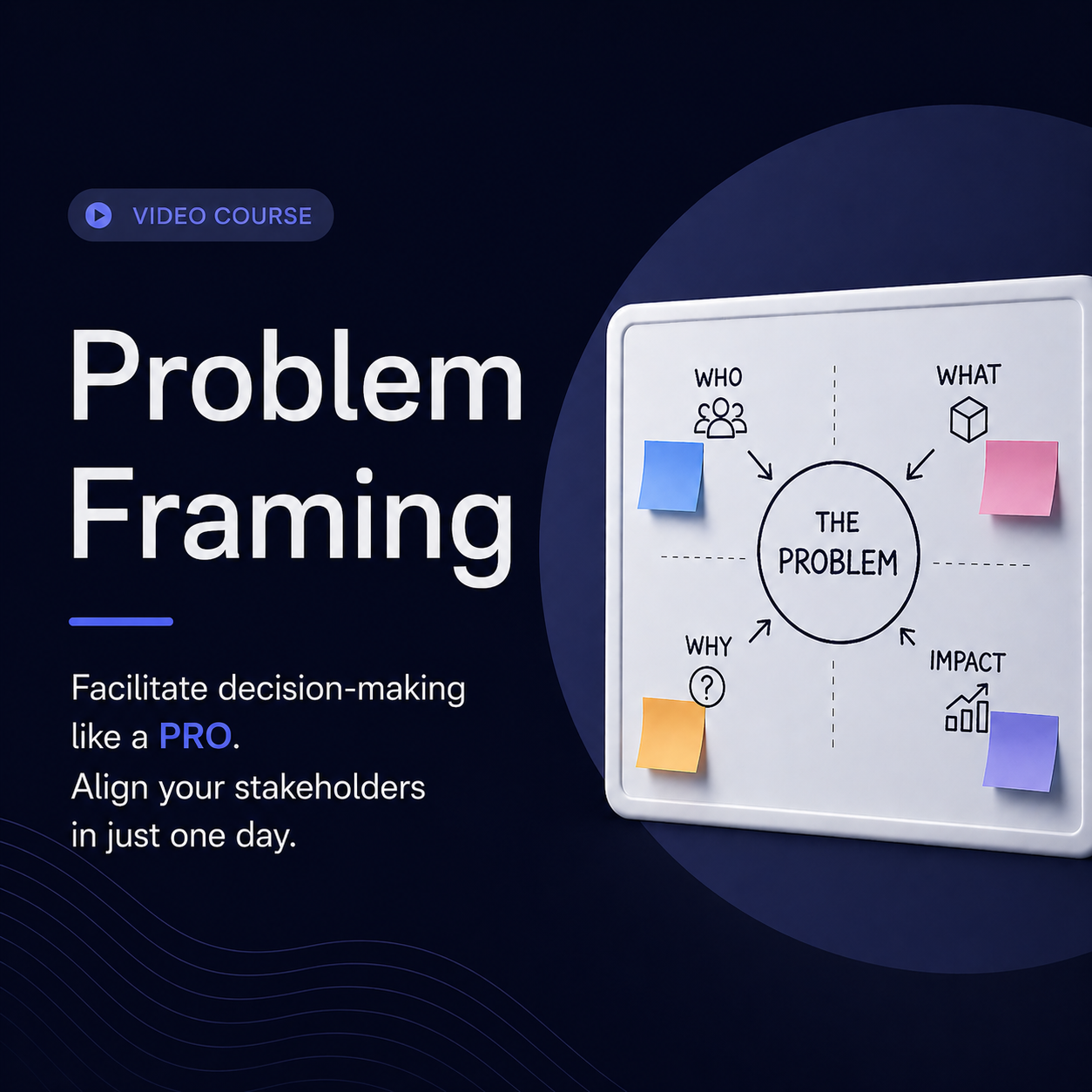
Problem Framing

One day. One problem worth solving.

A structured workshop where senior decision-makers move from a messy, complex challenge to a clear, agreed Problem Statement — grounded in customer reality and business priorities. The foundation for everything that follows.

Book a call

THE PROBLEM

In love with solutions. Not problems.

We all fall in love with our ideas. So we skip the hard part — defining the problem.

Teams jump to solutions while stakeholders are still describing the challenge in different ways. Designers build for one customer, engineers for another. Leadership pushes a direction nobody fully questioned.

The result: meetings that produce more questions than decisions. Roadmaps that change every quarter. Six months later, the work is done — and the problem is still there.

Problem Framing stops that sequence before it starts.

When you need it

Problem Framing is built for moments when the stakes are too high to move forward on assumptions.

The challenge is real, but different stakeholders describe it differently — and no one has been willing to call that out

Leadership buy-in is needed before a decision can move forward, but alignment hasn't happened

The team keeps circling symptoms without landing on a root cause

A decision needs to be made but every meeting ends with more questions than answers

What is Problem Framing

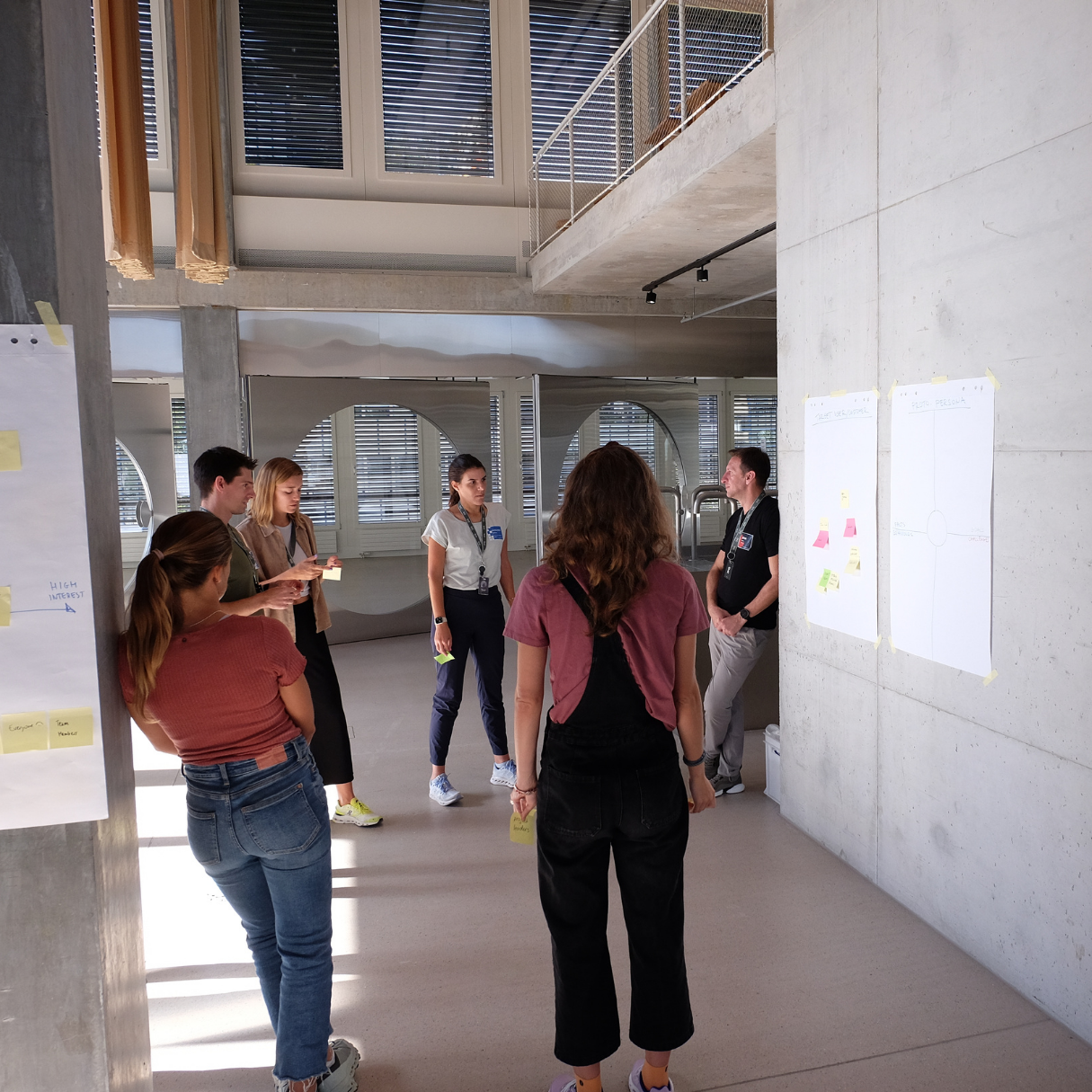
Problem Framing is a structured one-day workshop that brings senior decision-makers together to align on what's actually worth solving — before committing time, budget, or engineering resources to solutions that don't solve the right problem.

DSA created Problem Framing in 2018. Google was the first client. See how it went →

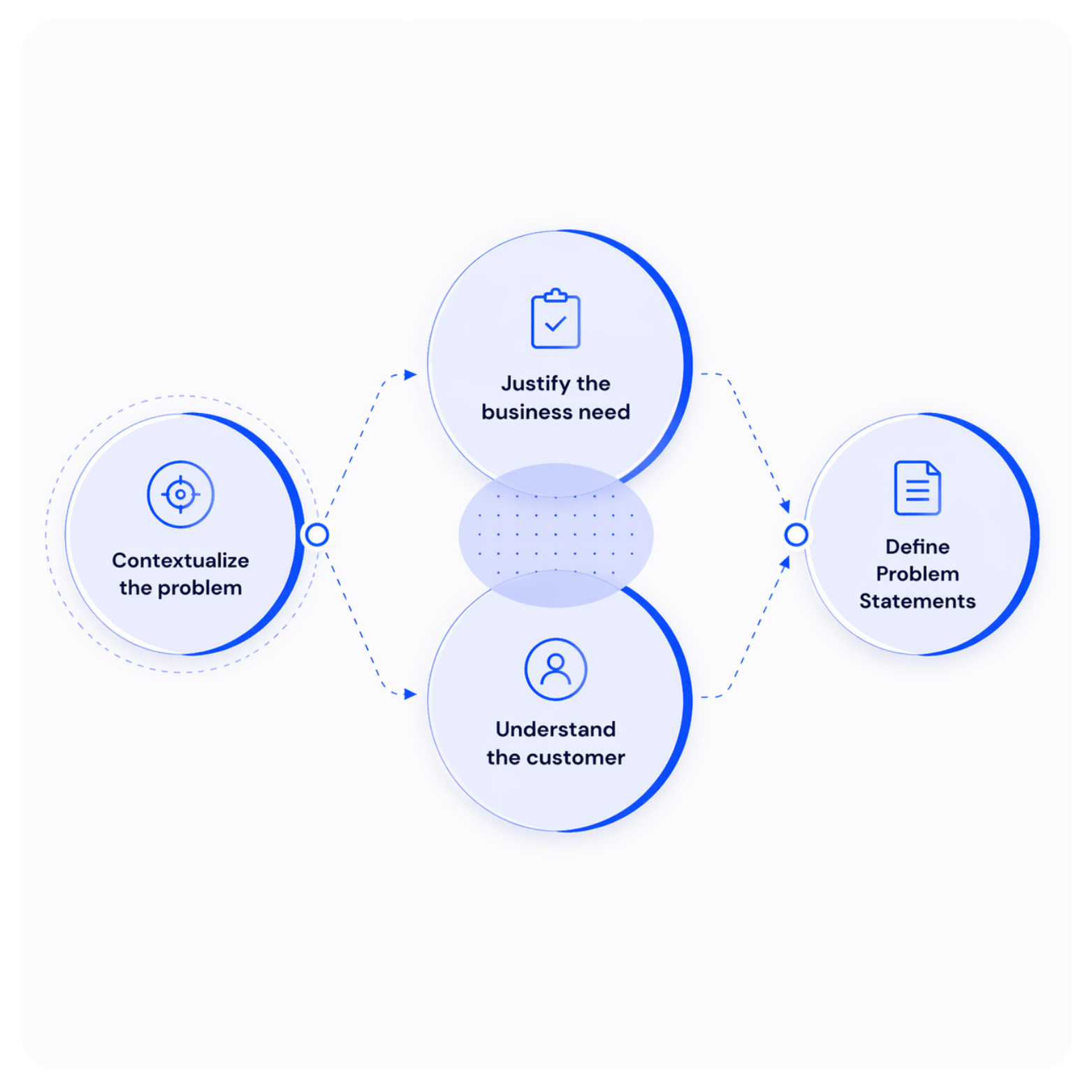
One day. Four phases.

01. Contextualize the Problem

The team surfaces internal realities — what's broken, what's been tried, what's actually working — alongside external forces: market shifts, competitor moves, changing customer behaviour. Information is unevenly distributed across organisations. This phase gets everyone on the same page.

02. Justify the Business Need

The team aligns around four questions: what they want to achieve, how success gets measured, what's limiting them, and what the cost of inaction looks like. Stakeholders leave with a shared definition of what winning looks like.

03. Understand the Customer

Stakeholders engage directly with the customer experience — working with real data, voting on pains and gains, and asking the harder question: who does the customer need to become?

04. Problem Statements

Everything converges into a prioritised shortlist of well-defined Problem Statements. The team prioritises based on two things: how painful the problem is for the customer, and how much it matters to the business.

THE OUTPUT

A decision that holds and the reasoning behind it.

By the end of the day, the team has a clear, agreed Problem Statement and the shared understanding of why it matters. Not a room that nodded. A team that built the reasoning together — grounded in customer reality and business priorities — and is ready to act on it.

HOW WE WORK WITH YOU

Three ways to get to the right problem

Ask us to facilitate

Your team brings the challenge and the domain knowledge. DSA handles everything before the room — stakeholder mapping, discovery interviews, customer research synthesis, persona and journey map preparation. Then facilitates the full day, making sure the right people are heard, assumptions get surfaced, and the session ends with a real decision

One day of facilitation, preceded by 1-2 weeks of preparation. On-site.

Book a consultancy call to see if we are the right fit

Train your team to run it

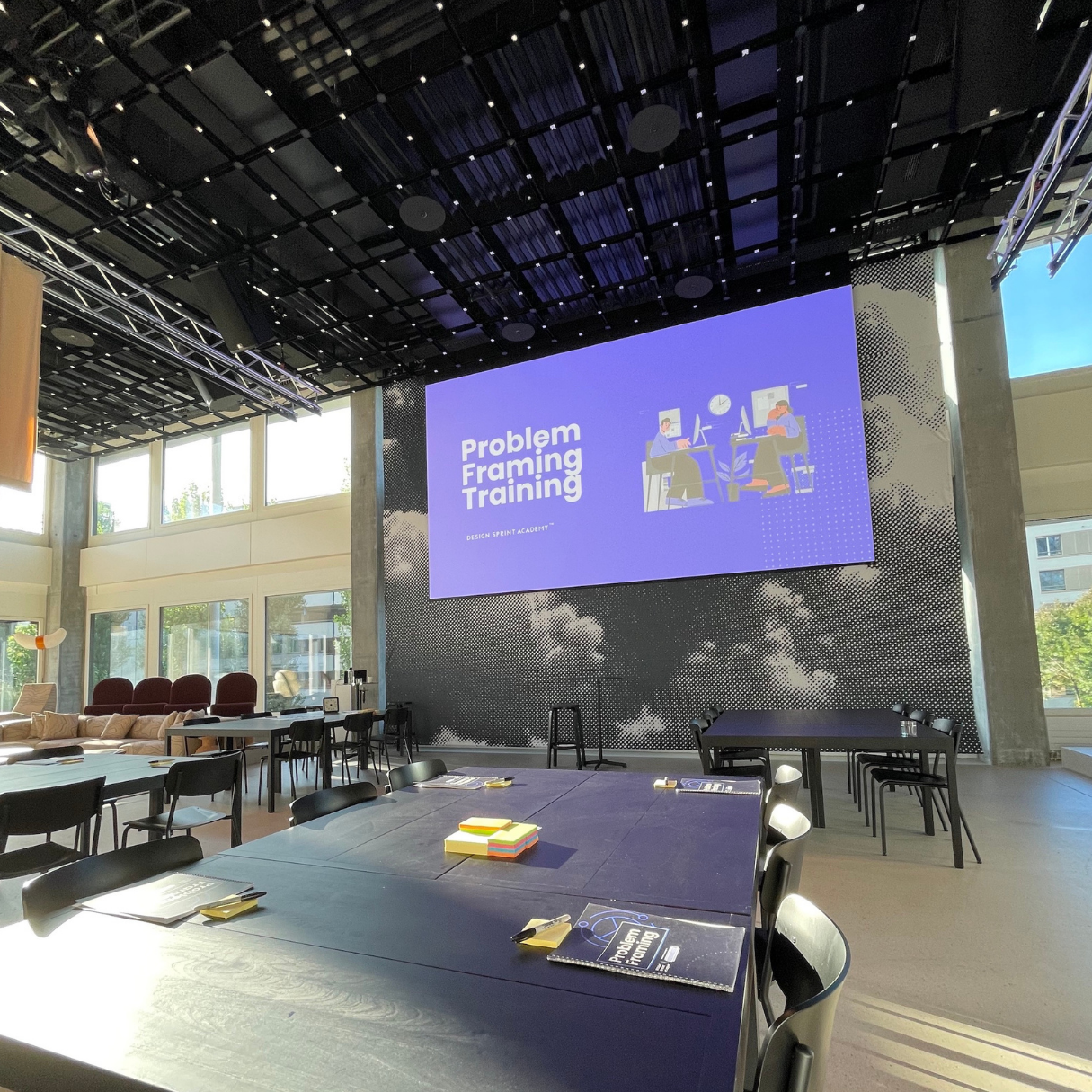
A one-day training for up to 15 people. Your team learns the full Problem Framing methodology and leaves with everything needed to run sessions independently — the Playbook, Facilitation Slides, Agendas, and Facilitation Toolkit.

For teams who need a repeatable way to align senior stakeholders on complex challenges without bringing in external support every time

One day. Up to 15 participants. In-person at your organisation.

Book a call to discuss an internal cohort for your team

Individual self-paced course

For individuals on your team who want to go deep on the methodology at their own pace. Six hours of step-by-step training, two ready-to-run workshop formats, 200+ facilitation slides, and live coaching calls with John and Dana. Everything needed to run Problem Framing sessions independently — without waiting for an internal cohort.

Self-paced. Lifetime access. Available at problem-framing.com.

Enroll now

From the field

How Problem Framing works in practice

View all articles

One day of Problem Framing costs less than one quarter of solving the wrong problem.

Book a call