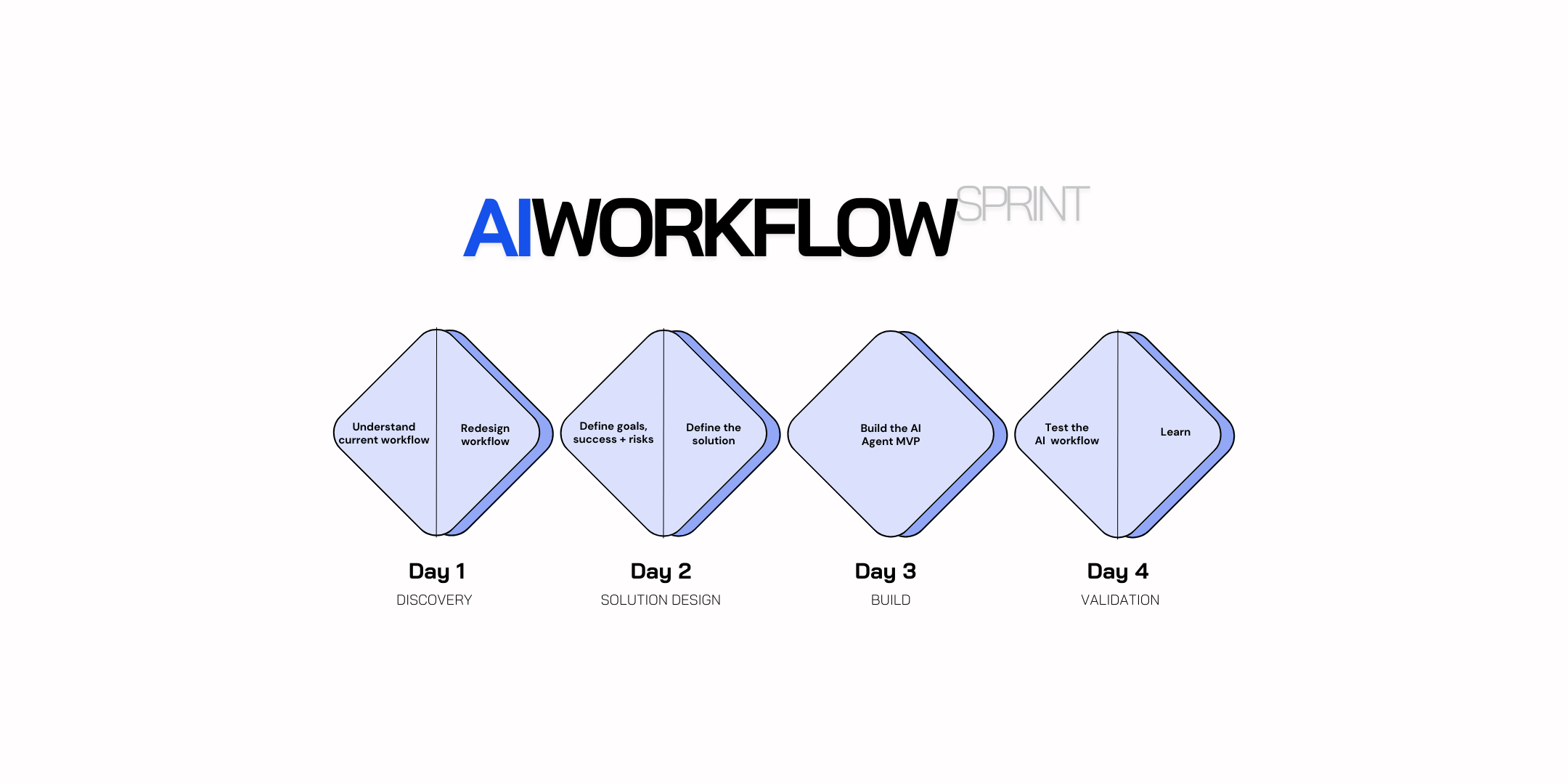
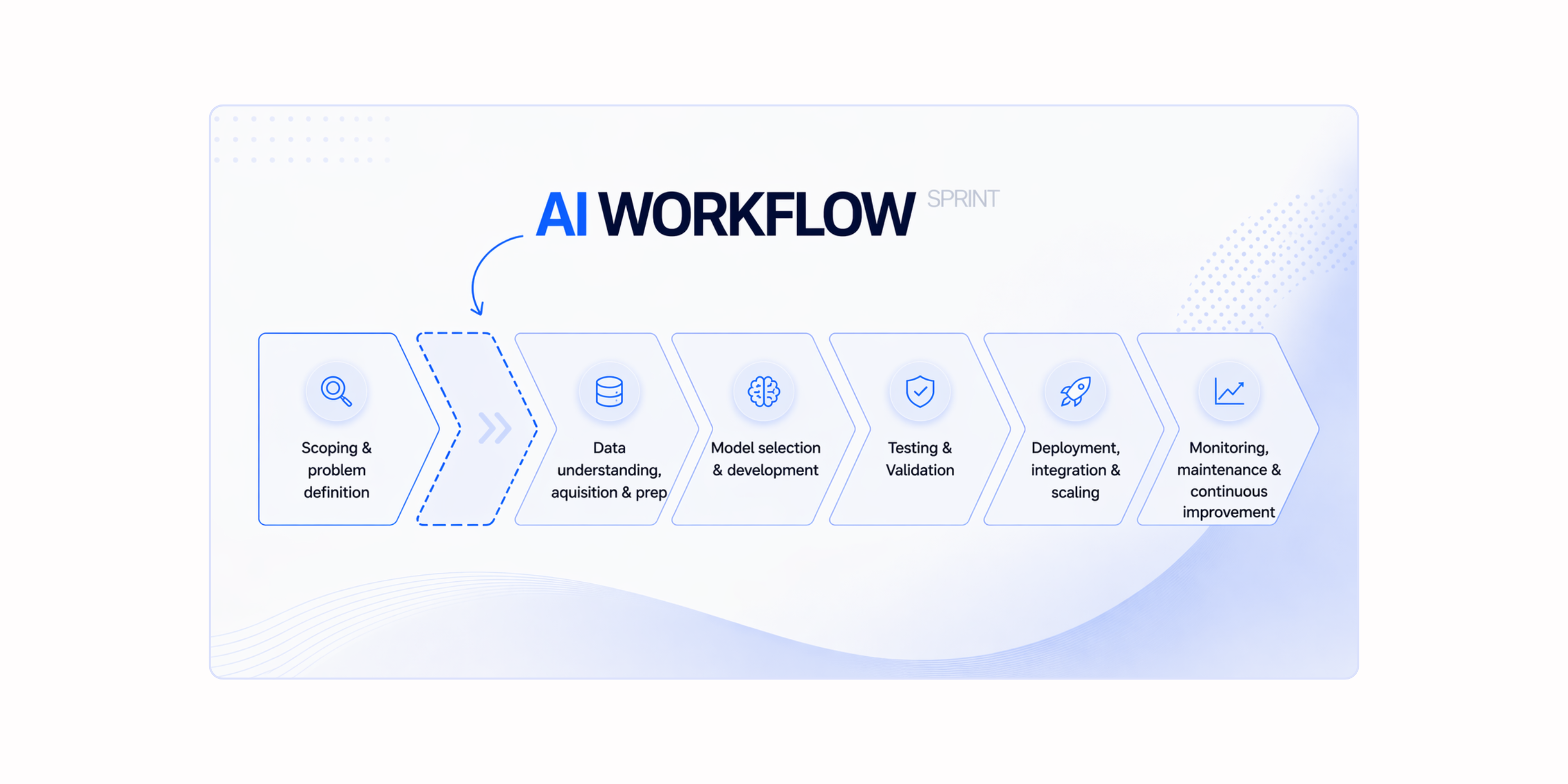
Most teams add AI to existing workflows and wonder why adoption stalls. The AI Workflow Sprint takes a different starting point — redesign the work around AI capabilities first, then validate it with the people who will actually use it. Four days. A working AI prototype. A scale, iterate, or stop decision backed by real employee feedback.
The model performs. The organization wasn’t ready for it. The employees who were supposed to use it don’t trust it. No one owns the change. Technically live. Practically unused.
It happens for three reasons - visible from the start.
IT scopes, builds, and hands over at deployment. By the time the people who own the workflow get involved, the architecture is fixed and reworking it is too expensive.
The AI engineer, the workflow owner, legal, compliance, and change management each get involved at different stages. By the time they're all across it, the decisions that affect them were already made.
No structured validation before the build. The first time a real employee sits with the system is during deployment — at full cost, with the whole organization now involved.
The AI Workflow Sprint is built for teams with a specific AI use case and a deadline to show results.
You're about to commit budget to an AI initiative — and you can't afford to defend the wrong one six months from now.
Leadership is asking for measurable ROI and you need to show them something that works - not something that looked good in demo.
Business, technical, legal, and change management are working separately — and the handoffs keep producing the wrong output
A pilot was built but employees aren't using it — and you need to understand why before you rebuild
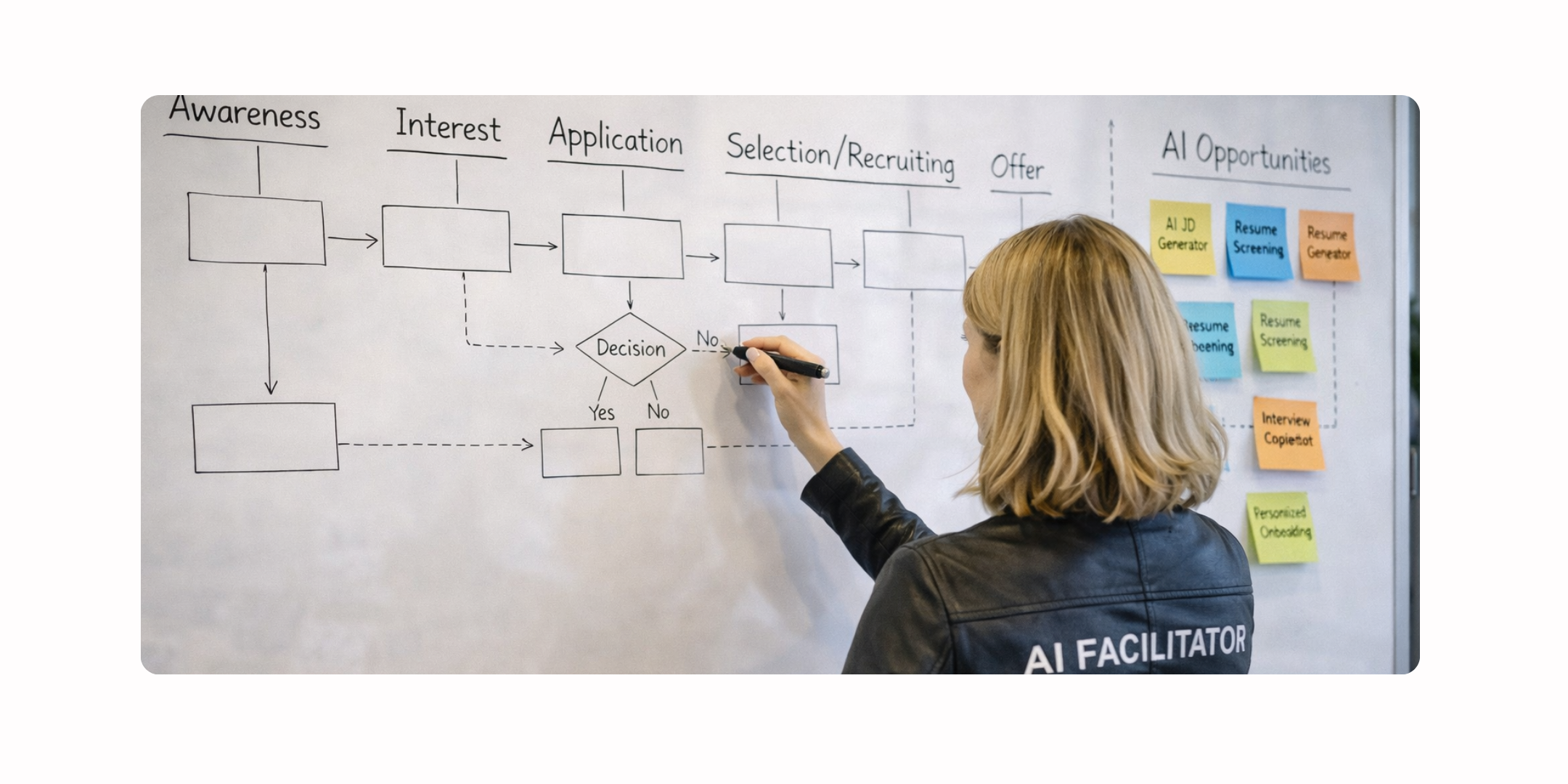
The AI Discovery Pod - a cross-functional team of 6–8 stakeholders - maps the workflow as it actually runs today. The broken handoffs, the steps that belong to nobody, the decisions made on instinct. Then a first-pass workflow redesign that cleans up the process before any AI is added.
The team defines success metrics, maps risk across different dimensions and designs the solution. The day closes with a storyboard: a frame-by-frame blueprint of the AI workflow of exactly how the AI will interact with the employee.
A focused trio — AI engineer, UX designer, and subject matter expert — builds a working AI prototype from the storyboard. Real enough for an employee to sit with it and say whether it changes the way they work.
Five structured interviews with employees who do the work. The Decider gets real evidence to make a scale, iterate, or stop call.
.png)
By end of day four, your team has a redesigned AI workflow, a functional AI prototype tested with five real employees, and a scale, iterate, or stop call grounded in real evidence. Success metrics agreed upfront. Risks mapped before anything was built.
That's what you take to your leadership - a clear decision, with the evidence to stand behind it.

Your team brings the domain knowledge and the business context. DSA facilitates all four days — making sure the right people are in the room, the workflow gets mapped accurately, risks get surfaced before the build starts, and the solution that comes out is one the organization can act on. The fastest path from validated use case to a decision your team can stand behind.
Four days. On-site.

A two-day training for up to 15 people. Your team learns the full AI Workflow Sprint methodology and leaves with everything needed to run sprints independently — the Playbook, Facilitation Slides, Agendas, and the AI Copilot. One investment. Every AI workflow initiative your team runs from this point forward goes through a structured process, not improvisation.
Two days. Up to 15 participants. In-person at your organisation.

Not ready to commit to an internal engagement? The public session lets you experience the full AI Workflow Sprint method before deciding how to bring it into your organisation. Two days alongside practitioners from other companies — you run the method in real conditions and leave with the full Facilitation Toolkit.
How the AI Workflow Sprint works in practice — and what we’ve learned running it with teams across the globe.