THE PROBLEM
Too many AI ideas. No way to decide.
Every big AI decision brings together people with different needs. Business needs a strategic win. Engineering needs something it can build and maintain. The people who do the work need it to fix what actually slows them down, and they're rarely asked.
With no shared way to weigh those needs, one of two things happens. The decision stalls while every side argues its case, or everything gets a pilot so nobody has to say no. Six months later, nobody can explain which AI investments were worth it, and the time and credibility spent on the rest don't come back.
AI Problem Framing is built for the moment before that bet gets made.
When you need it
AI Problem Framing is built for any team that has to decide which AI ideas are worth pursuing.

There are more AI ideas than capacity, and no shared way to filter them.
Business, technical, and domain experts each see the problem differently.
A request arrives as a solution, and nobody has defined the problem behind it.
There's no clear line of sight between your AI efforts and the business goals you're accountable for
What is AI Problem Framing
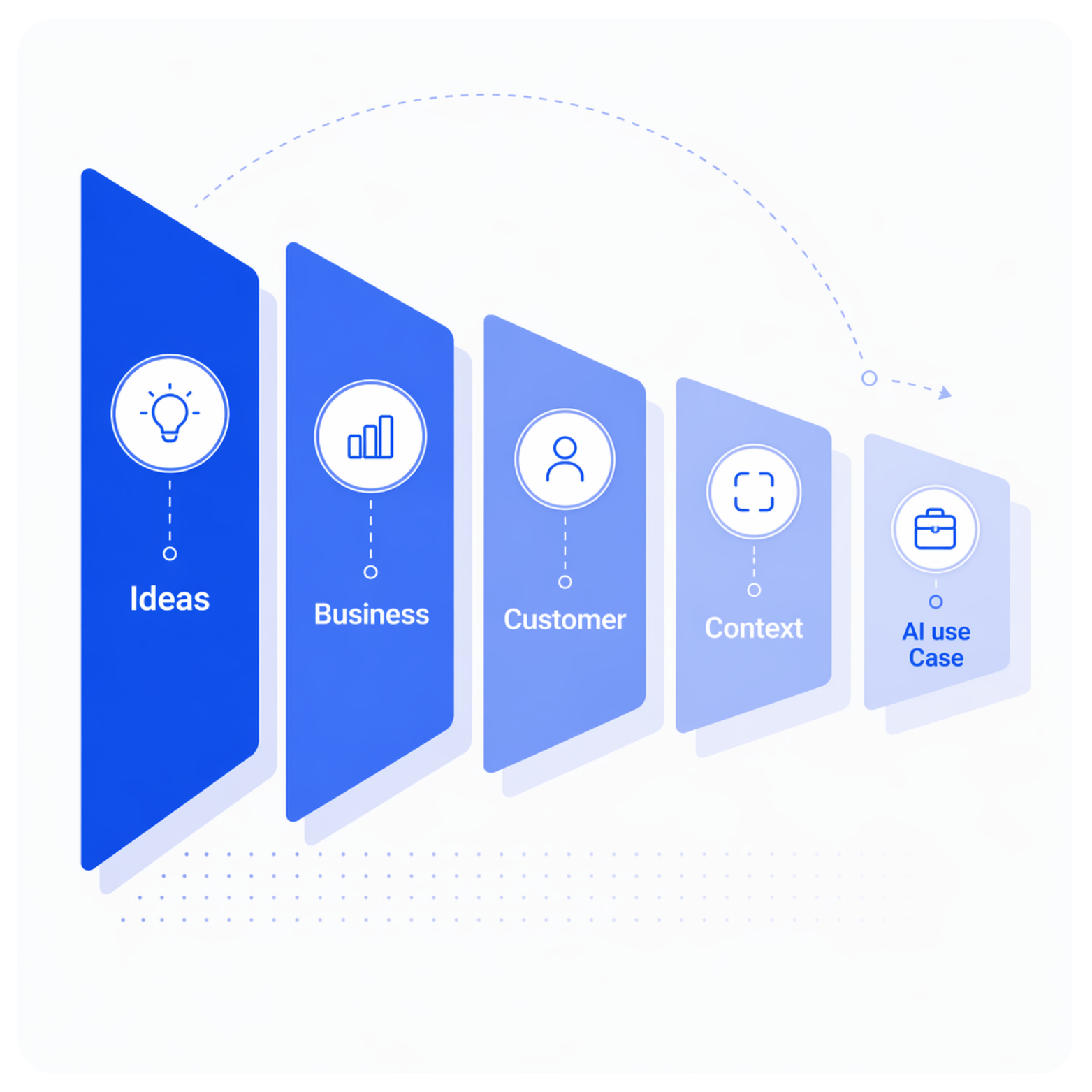
AI Problem Framing is a one-day structured workshop that connects three things most AI initiatives keep separate — your business strategy, your customers' real problems, and what AI can actually do.
Five stages:
- AI Ideas — Every AI idea, mandate, and experiment surfaces into one shared space. Nothing filtered yet.
- Business Goals — Each idea gets connected to a strategic business goal. Off-strategy ideas get parked.
- Customers — The team defines the highest-value customer segment and maps their problems by urgency.
- Context — The customer journey or workflow gets mapped and opportunity statements generated.
- AI Use Cases — Ideas get stress-tested across four lenses: growth potential, cost reduction, feasibility, and data availability. The ones that survive become AI Use Case Cards.
THE OUTPUT
A short list of AI use cases worth pursuing
By the end of the day, the team has a prioritized short list. Each use case is documented as an AI Use Case Card: one page that states who it's for, the problem, the AI capability, the outcome, and the business goal it serves.
For [Minimum Viable Segment] who experience [specific problem] that is [painful], we believe there's an opportunity to use [this AI capability] to help them achieve [desired outcome or pain relief]. This opportunity is aligned with our business goal of [specific KPI, OKR, or SMART goal].
The cards also make it possible to stop ideas early, because they couldn't survive the process. Every idea stopped here is one nobody spends the next six months building.
HOW TO WORK WITH US
Three ways to bring AI Problem Framing into your work
.png)
Ask us to facilitate
You bring the AI ideas and the business context. DSA prepares and facilitates the full day, and your team leaves with a prioritized short list it can take to leadership.
One day. Up to 7 participants. On-site or remote
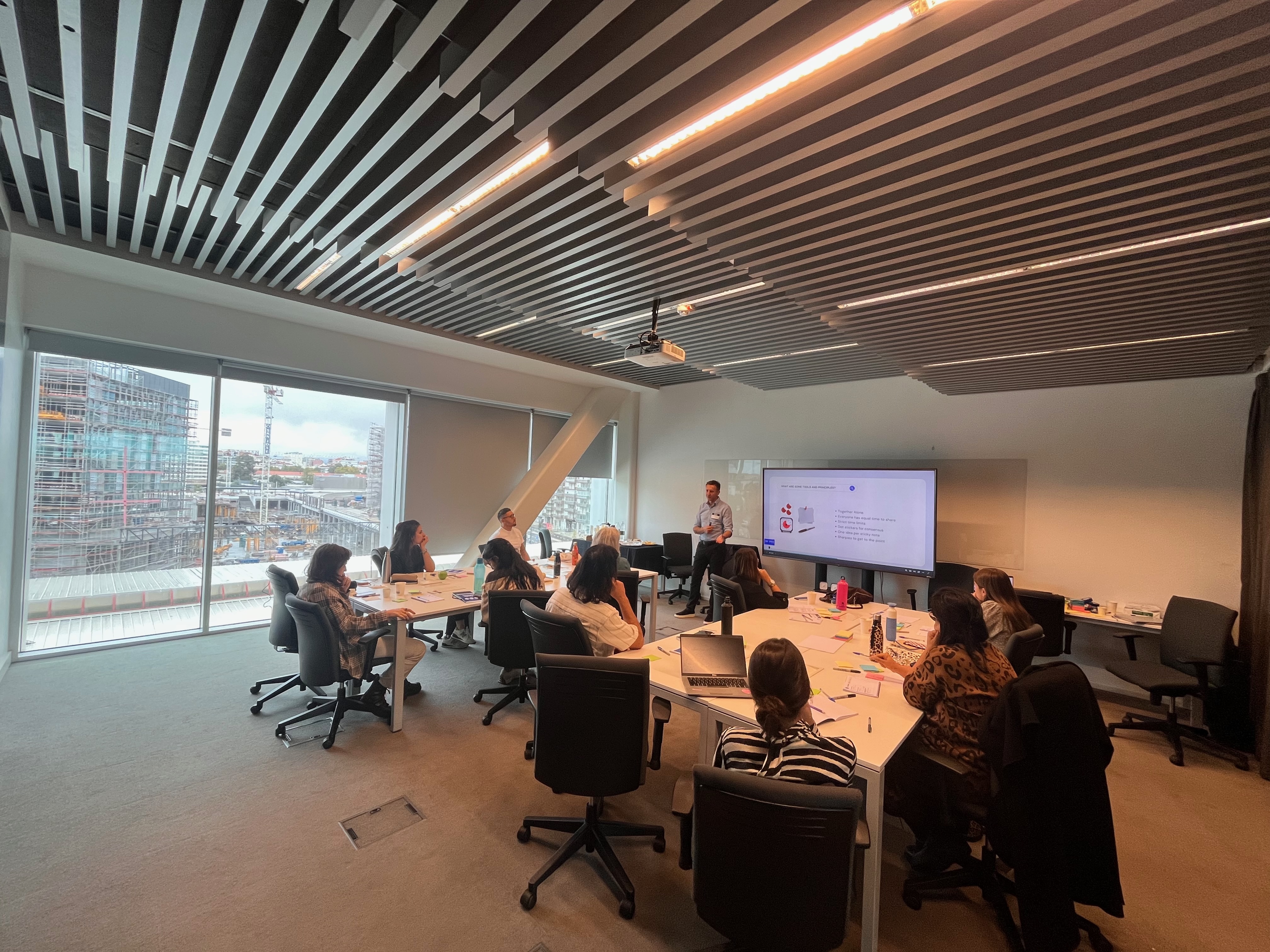
Train your people
Your people learn to run AI Problem Framing themselves, on real AI ideas from your own work. We tailor the training to the team and the context it works in, and every participant leaves with the Playbook, Facilitation Slides, Agendas, and Worksheets.
Up to 15 participants. In-person at your organization

Try the method first — join a public session
The AI Facilitator Training in Berlin covers AI Problem Framing on day one and the AI Workflow Sprint on days two and three, alongside practitioners from other companies. You leave with the full Facilitation Toolkit.

From the field
How AI Problem Framing works in practice - and what we've learned running it with teams at Google, HSBC, Adidas and beyond.
.png)
.jpg)
.png)


