Not another prompting course. A three-day training that teaches your AI Champions to run AI Problem Framing and AI Workflow Sprints — so the ideas they surface become use cases leadership can fund and workflows that change how the organization works.
Your Champions did what they were asked. They helped colleagues use AI tools, shared what worked, improved individual workflows, and drove adoption.
Now leadership is asking harder questions. Which use cases produce measurable value? What should we scale, stop, or redesign? Where is the return on our AI investment?
That is a transformation mandate. It asks Champions to change how the business works, not just how individuals work, and nobody trained them for it. Without a shared method, three things happen.
Each one invents their own approach, so quality varies from case to case.
A Champion spots an opportunity bigger than peer adoption. Then it sits in a spreadsheet, because nobody has a way to turn "Can we use AI here?" into a decision.
Business, IT, data, and legal join one at a time. By the time they're all involved, the workflow decisions were already made, and the work goes back around.
AI Champions Training is built for organizations ready to move from tool adoption to business impact.
You're launching or redesigning an AI Champions program, and you want it to change how the business works, not just how people use the tools.
Your central AI team can't run discovery for every business unit, and you need Champions who can.
Your Champions surface plenty of AI ideas, but few reach a decision. You can't pursue them all, and you need a way to focus.
You're hiring AI transformation and enablement leads, and you want to give them a method for aligning stakeholders and turning business problems into AI use cases.
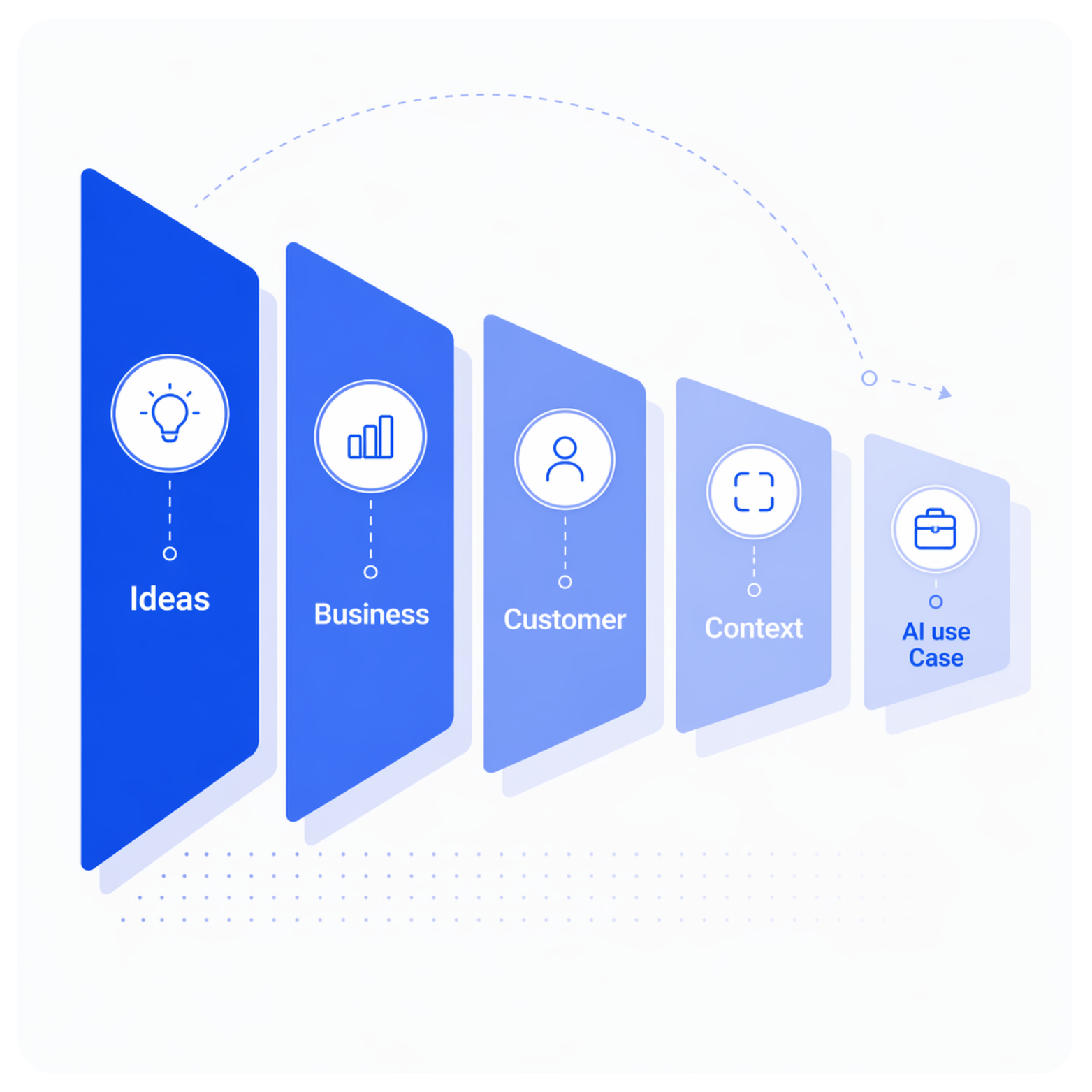
Champions learn to guide a cross-functional team from scattered AI ideas to the AI use cases worth pursuing. They help the team answer the critical questions about every idea. Is it connected to a business goal? Does it solve a real need for customers or employees? What value would it create? Is it feasible to build? The team ends the day with a short list of AI use cases it can justify to the business.
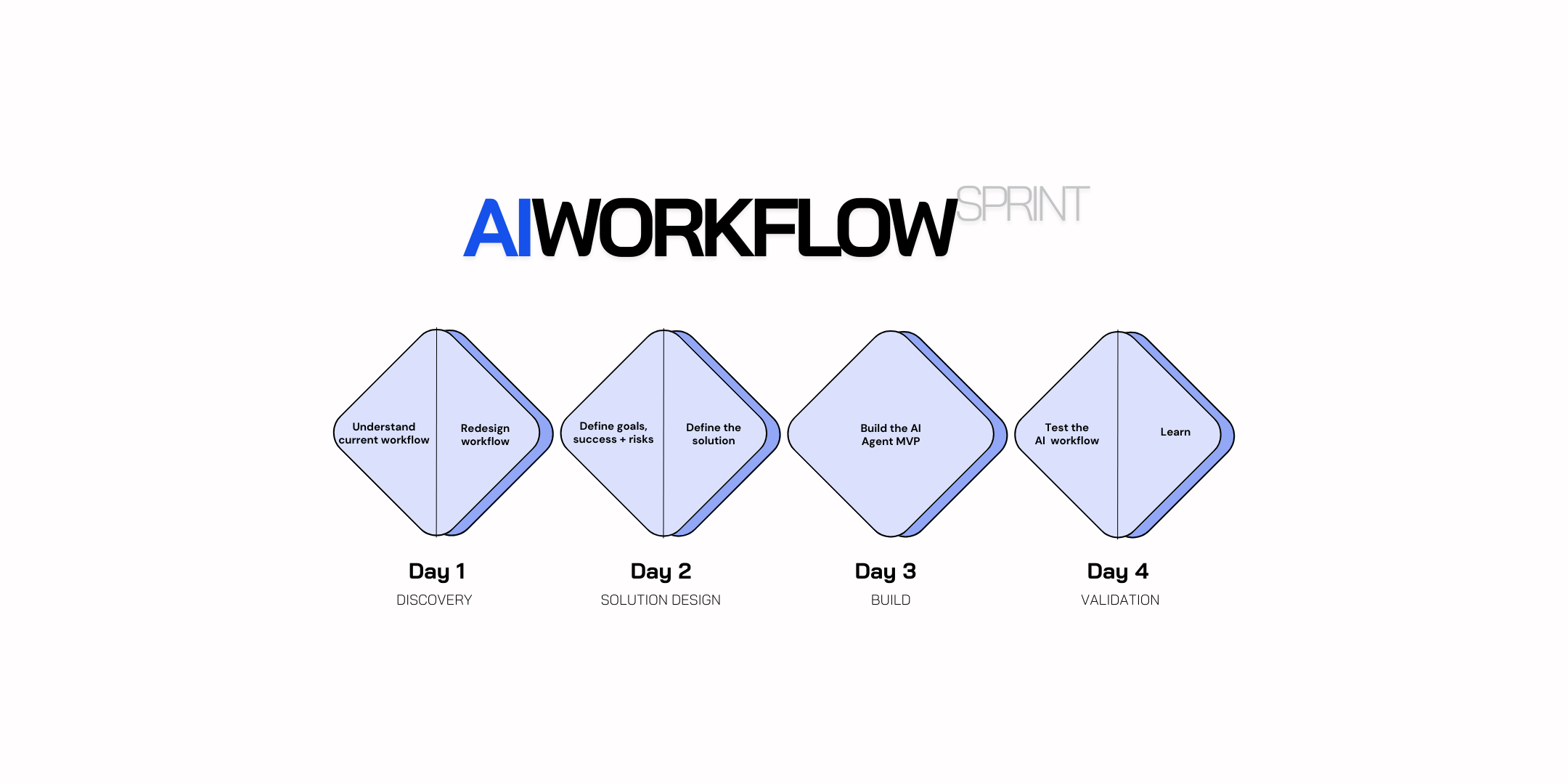
Champions learn to guide a cross-functional team from a justified AI use case to a redesigned workflow. The team maps the workflow as it runs today — the handoffs, the workarounds, the friction — and redesigns it around AI capabilities and the outcomes the business wants. It defines success metrics, maps risk, and storyboards how AI should work in a real context. The storyboard becomes a blueprint for an AI agent MVP, which the team tests with real employees to learn whether this workflow is worth changing.
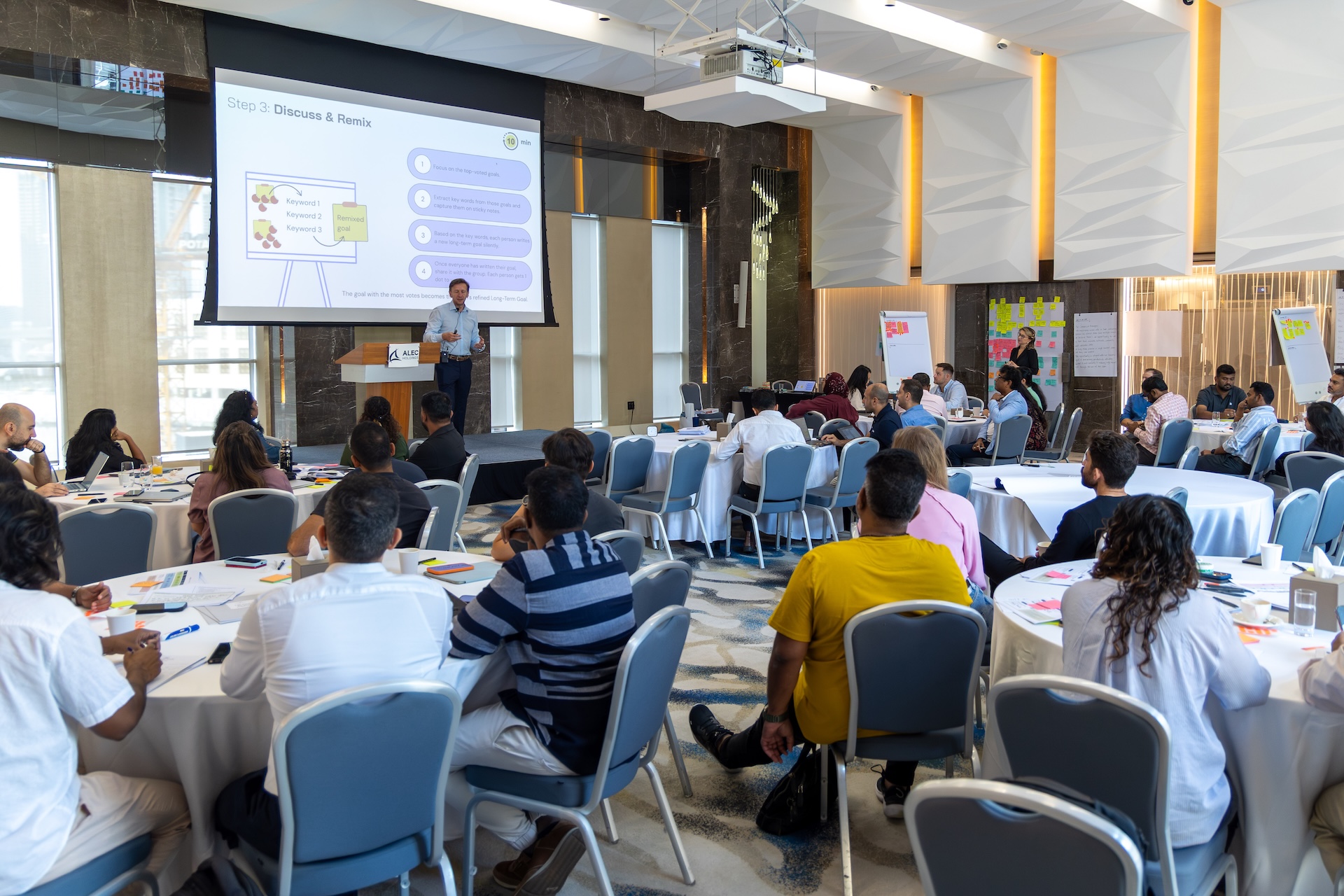
Champions learn by doing. The training runs as a live workshop. Champions work through every step of both methods hands-on, on real AI ideas from your program, and take turns as facilitator, Decider, and team member.

.png)
By the end of day three, your Champions have run both methods end to end. They know how to guide a team from scattered ideas to a portfolio of AI use cases the business can justify, and from a use case to a redesigned workflow tested with the employees who'll use it.
Facilitation capability built once.
AI value that compounds.

A three-day training for your Champion cohort. Day 1 covers AI Problem Framing. Days 2–3 cover the AI Workflow Sprint. Your Champions practice on your own AI ideas and leave with the AI Facilitation Toolkit — Playbooks, Facilitation Slides, Agendas, and Worksheets — everything needed to run both methods independently.
Three days. Up to 24 participants. In-person at your organization.

After the training, DSA stays available on a retainer. We coach your Champions as they run their first real sessions, pressure-test their facilitation, and help the standard hold as the method spreads across teams. Light-touch support, for as long as it's useful.
Post-training advisory support. Remote.

Not ready to commit to an internal cohort? Send one or two Champions to a public session first. Three days alongside practitioners from other companies: they run both methods in real conditions and leave with the AI Facilitation Toolkit. A low-commitment way to test whether this is the right approach for your program.
How AI Champion programs work in practice — and what we've learned building them with enterprise teams.