Reach plc — Problem Framing training for Product Teams at the UK’s largest news publisher

The specific problem with news publishing product teams
Building products at a news publisher is structurally different from building products at a software company or a consumer platform. The competing forces in the room are not just commercial and user-centric — they are editorial, commercial, audience-specific, and platform-dependent, often simultaneously.
At Reach — the UK's largest commercial news publisher, operating brands including the Daily Mirror, Manchester Evening News, and Birmingham Live — a product or UX team making a decision about how to serve readers on a regional news platform is navigating all of these at once: what readers in that region actually need, what advertisers in that market will pay for, what editorial standards require, and what the platforms through which content is distributed will reward or penalize.
That's not a focus problem. It's a structural condition. And the tools that help product teams navigate it in simpler environments — user stories, OKRs, sprint planning — are necessary but insufficient when the stakeholder map is this complex and the competing logics are this genuinely divergent.
What Reach recognized in 2022 was that the gap in their capability wasn't in execution. Their product, UX, and delivery teams knew how to execute. The gap was upstream: in the structured process for moving from a multi-directional stakeholder environment to a single, agreed definition of the problem worth solving.
What makes Reach's environment specifically hard to navigate
Reach operates across national and regional news — a combination that creates a scale of audience complexity that few media organizations manage. A decision that works for a national Mirror reader in London may not work for a Manchester Evening News reader whose relationship with local journalism is entirely different in character and depth. Multiply that across dozens of brands and platforms, and the inputs that land on a product team's desk in any given week are genuinely overwhelming in their volume and their apparent contradiction.
The pressures compounding this in 2022 were specific. Digital publishing was navigating platform algorithm changes that threatened organic reach, cookie deprecation that put advertising revenue models under structural pressure, and the beginning of AI-driven content production that raised questions about what human editorial judgment would be worth in a content-saturated environment. Product teams at Reach were being asked to make directional decisions under conditions of high uncertainty, with multiple stakeholders holding legitimate but competing views about what the right direction was.
The classic response to this condition is more process: more stakeholder meetings, more discovery, more research, longer roadmap planning cycles. Reach recognized that more process wasn't the answer. What they needed was a sharper process — one that moved from complex, multi-signal inputs to a defined problem worth acting on, without requiring weeks of alignment work to get there.
What the training covered
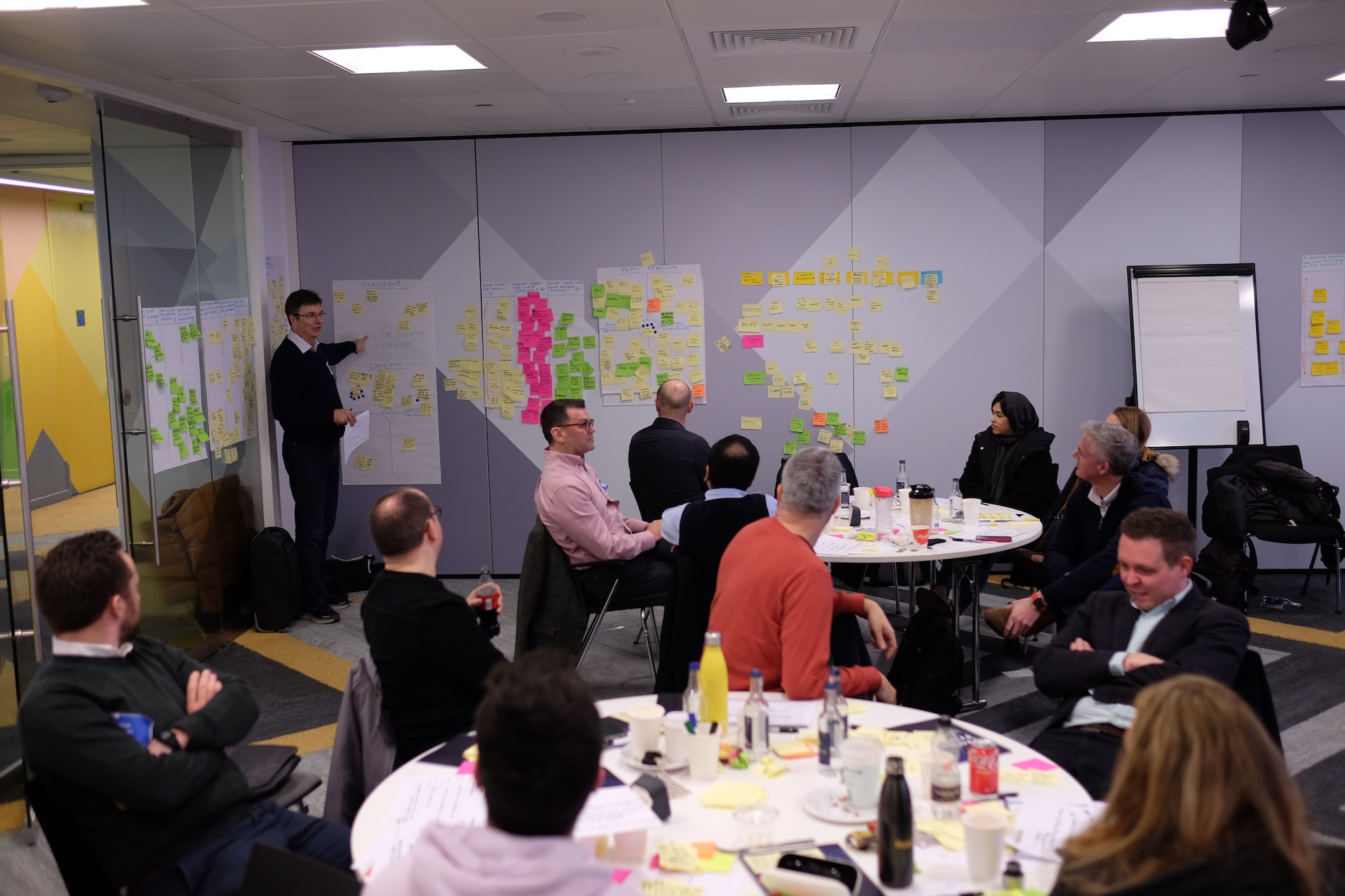
In 2022, Design Sprint Academy delivered a full-day Problem Framing Training for a cross-functional group of Reach's product, UX, and delivery leads. The format — one day, real challenges, cross-functional room — was deliberate on each dimension.
One day because the output of Problem Framing is a defined problem statement, not a solved problem. The investment is in the clarity that makes every subsequent step faster — not in extending the process that precedes action.
Real challenges because the learning lands differently when participants are working on something they actually need to resolve. Abstract exercises produce abstract understanding. Working on a live product or process challenge produces the kind of insight that transfers immediately into how someone facilitates their next stakeholder meeting.
Cross-functional room because the value of a shared problem statement depends on it being shared across the people who will need to act on it. Product, UX, and delivery leads coming to the same understanding of what the right problem is — rather than each function carrying its own version — changes the nature of the work that follows. It removes the translation step that consumes time and generates misalignment at every handoff.
The day covered four interconnected capabilities.
Mapping the context. Before a problem can be defined, the landscape around it needs to be visible: who is affected, what is already known, what has been assumed rather than verified, and where the genuine uncertainty lives. For Reach's teams, this step had particular force — mapping the context of a regional news product decision requires making explicit the competing stakeholder logics that are usually left implicit and unresolved.
Surfacing assumptions. Every product brief, stakeholder request, or user research finding arrives pre-loaded with assumptions. Some are correct. Some are not. Problem Framing gives teams a structured process for making those assumptions visible before they are embedded in a solution direction — which is when they become expensive to question.
Sharpening problem statements. The move from a vague, overwhelming challenge to a specific, actionable problem statement is the core discipline of Problem Framing. For product and UX leads at Reach, this meant converting inputs like "our regional audiences are underserved" or "our digital subscription conversion isn't where it needs to be" into problem statements precise enough to generate a clear test of whether a proposed solution addresses them.
Facilitating alignment. Problem Framing isn't a solo activity. It's a structured process for getting a room of people — with different functions, different priorities, and different implicit definitions of what the problem is — to converge on a shared definition. The facilitation skills the training developed weren't for running workshops in general. They were for the specific challenge of guiding a multi-stakeholder room toward a decision that everyone can recognize as both accurate and actionable.
The specific value for a product, UX, and delivery room
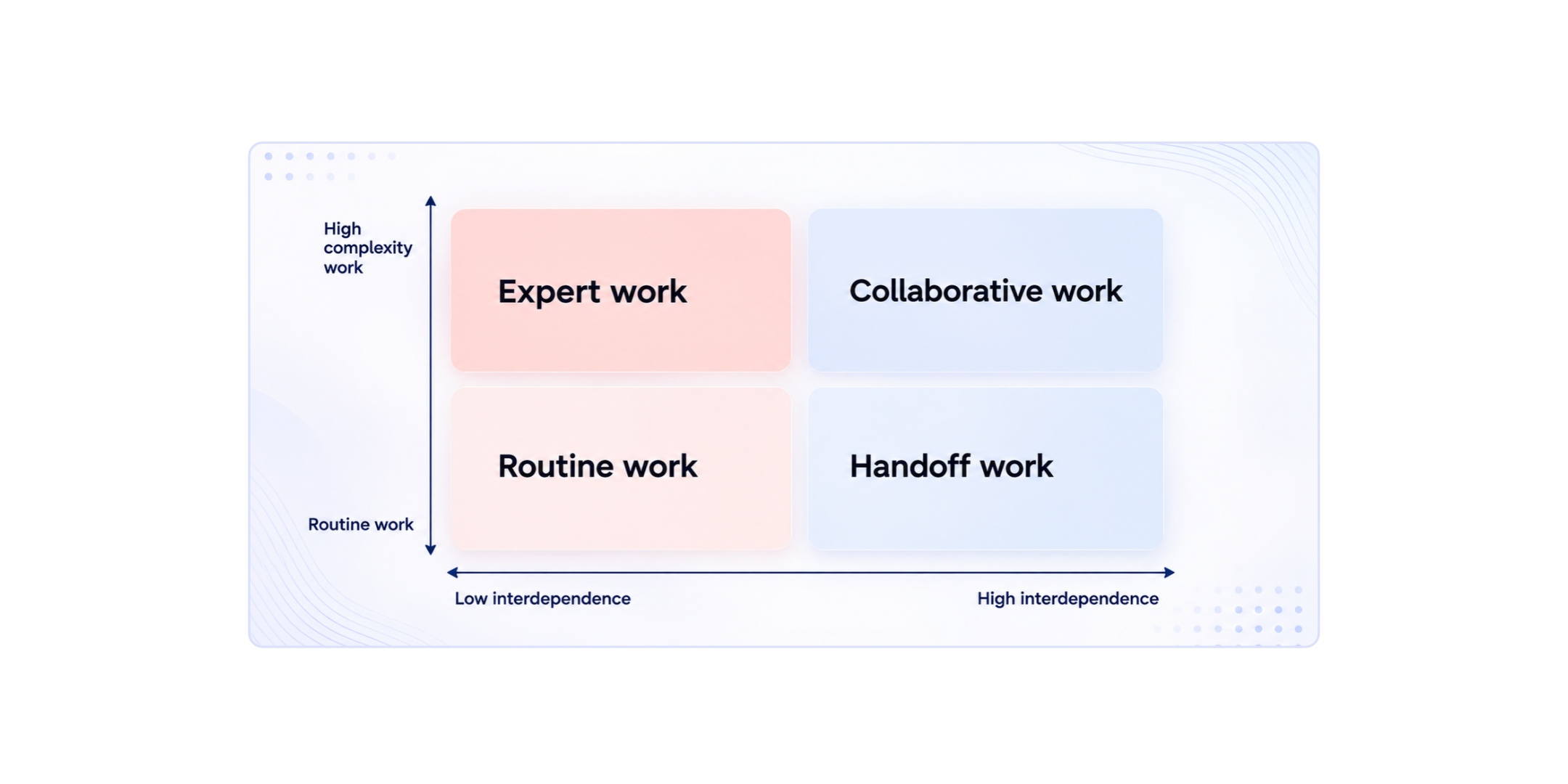
Product leads, UX leads, and delivery leads bring fundamentally different orientations to the same problem. Product thinks in outcomes, roadmaps, and strategic priorities. UX thinks in user needs, experience quality, and behavioral evidence. Delivery thinks in scope, feasibility, timeline, and risk.
In a typical product process, these orientations are applied sequentially — product defines the direction, UX researches the user, delivery scopes the work. The problem definitions that each function carries are rarely surfaced and compared; they're assumed to be aligned because everyone has been in the same meetings.
Problem Framing makes those divergences visible. When a product lead, a UX lead, and a delivery lead each articulate what they believe the actual problem is — using the structured tools of assumption surfacing and problem statement construction — the divergences that typically create friction at the handoff stage surface in the room, where they can be resolved. The aligned problem statement that results isn't a compromise between three different definitions. It's a shared definition that all three functions can recognize as accurate.
For Reach's teams, operating across functions that move at different speeds and with different success metrics, that shared definition is operationally valuable. It's the foundation that lets product, UX, and delivery work from the same understanding rather than reconstructing alignment at every stage of a project.
What one day produced
Four specific shifts came out of the Reach training.
A repeatable process for discovery, research, and strategy work. The training wasn't a one-time event in the sense of producing insight that fades. It produced a process that participants could apply in their next discovery session, their next stakeholder workshop, their next strategic planning conversation. Problem Framing becomes a repeatable capability rather than a single-use tool.
The confidence to say "not yet" to solutions that aren't grounded. In a fast-moving publishing environment, the pressure to start building is constant. Speed is a core value — in journalism, in digital product, in the commercial reality of a publishing business with revenue targets and platform deadlines. The specific discipline that Problem Framing develops is the capacity to slow down just enough — to require that a problem be clearly defined before a solution is committed to — without that slowdown feeling like obstruction. Teams that have gone through the process understand that the delay is an investment, not a cost.
Faster stakeholder alignment. The paradox of Problem Framing is that it makes the overall process faster by making the early stages of it more deliberate. A stakeholder conversation anchored by a structured problem definition process moves toward decision more efficiently than one that starts with competing solution proposals. Reach's teams left with a way to bring stakeholders into focus — not through extended debate, but through a structured process that makes the problem visible in terms everyone can evaluate.
Shared language across product, design, and delivery. Shared language is underrated as an organizational asset. When product, UX, and delivery leads use the same vocabulary to describe what a problem is, what a good problem statement looks like, and what it means to say that a solution addresses the right challenge, the communication overhead at every project stage reduces. The time spent translating between functional orientations goes down. The quality of the conversations that remain goes up.
Why media organizations need this now
The structural pressures on news publishing in 2022 have intensified rather than resolved. Platform dependency continues to threaten audience ownership. AI-generated content is raising the stakes on what human editorial judgment is worth and how it should be invested. Subscription models that seemed like the answer to advertising volatility are themselves showing the limits of audience tolerance for paywalls. And the proliferation of digital products — apps, newsletters, podcasts, live blogs, video — is creating a product surface area that would challenge any organization's capacity to define priorities clearly.
In that environment, the organizations that will make better decisions are not necessarily the ones with more data or more research capacity. They're the ones with a more structured process for converting what they know into a defined problem worth acting on. That process is what Problem Framing develops.
For product and UX teams in media, the investment is one day. The output is a capability that changes the quality of every discovery session, every stakeholder workshop, and every roadmap conversation that follows.




.png)