Quibi spent $1.75B on a problem no one had: the 4U Framework lesson

The workshop that could have saved Quibi $1.75B
Quibi launched in April 2020. The pitch was simple: premium entertainment in short episodes, built for your phone. Ten-minute stories for the gaps in your day. The commute. The coffee line. The few minutes between meetings. The moments when you were already scrolling.
On paper, it looked serious.
Jeffrey Katzenberg, former chairman of Walt Disney Studios and co-founder of DreamWorks, founded the company. Meg Whitman, former CEO of eBay and Hewlett-Packard, ran it. Investors included Disney, NBCUniversal, WarnerMedia, Sony Pictures, Alibaba, Goldman Sachs, and JPMorgan Chase.
Before Quibi had a single paying customer, it had raised $1.75 billion.
It spent heavily on original content from names like Steven Spielberg and Guillermo del Toro, with actors including Sophie Turner and Idris Elba.
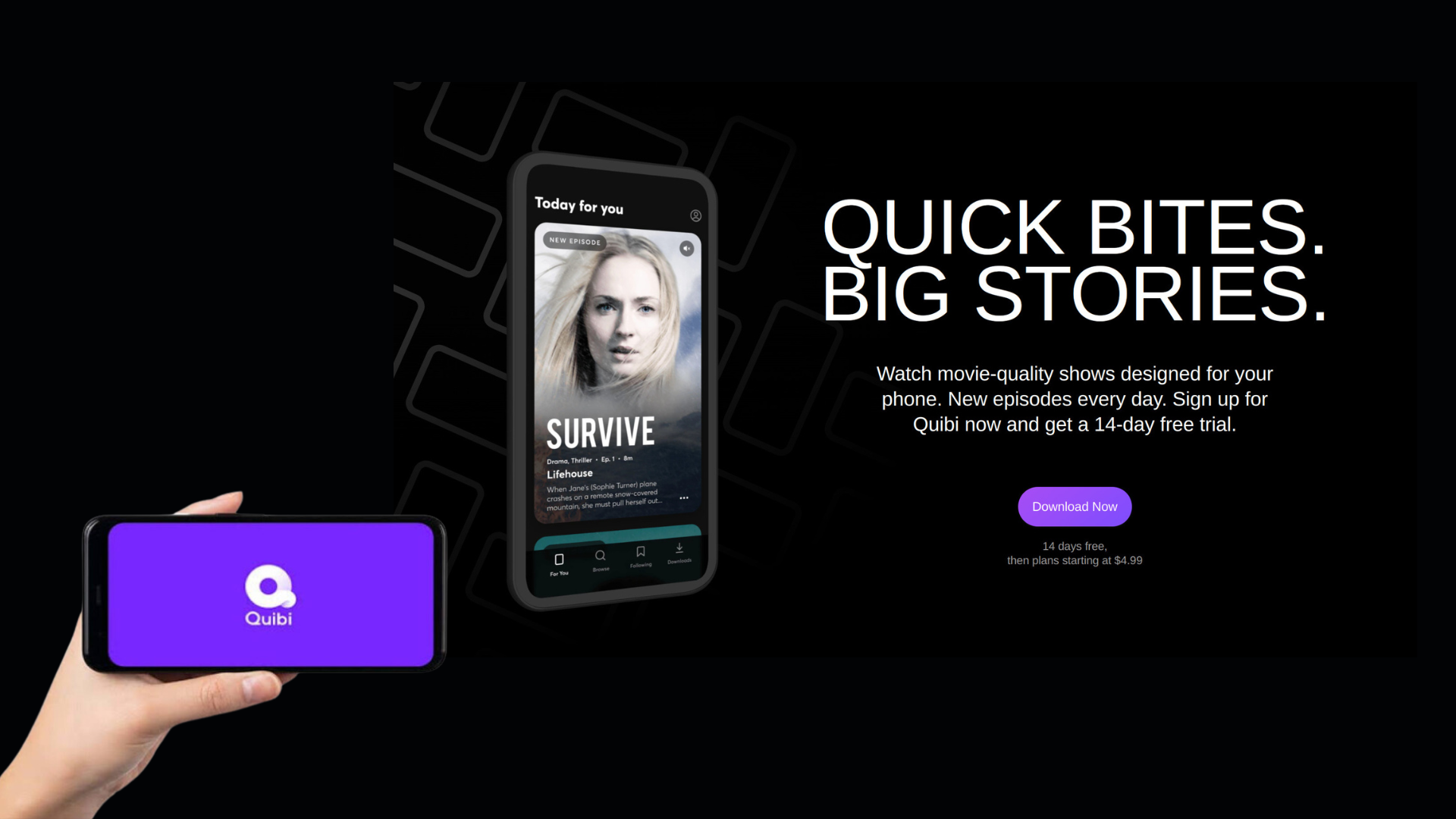
Six months after launch, Quibi announced it was shutting down.
By December 2020, it was finished. In early 2021, Roku bought the content library for less than $100 million.
Most explanations focus on the obvious reasons.
The pandemic wiped out the commute moments Quibi was built around. The mobile-only product kept shows away from the bigger screens people were using at home. The $5–8 subscription placed Quibi next to Netflix, Hulu, and Disney+, but without the same depth of content.
All of that mattered. But the deeper failure happened earlier.
Quibi misjudged the problem.
It treated “boredom on the go” as a major unsolved problem. Serious enough to justify a premium subscription, a mobile-only product, and hundreds of millions in original content.
Run that problem through the 4U Framework, and the weakness shows up fast.
This is the kind of failure facilitators are positioned to prevent. Not the launch failure — by the time the launch is happening, the misjudged-problem decision has been made and the money is gone. The conversation that did not happen at Quibi is the conversation a 4U workshop creates. Two hours, the right room, the four lenses, and the foundational weakness becomes visible while the organization can still do something about it.
This article walks through what that looks like, and how to use the same four-lens method to facilitate the conversation in your own organization — before the next misjudged-problem becomes the next cautionary tale.
What is the 4U Framework?
The 4U Framework is a problem-prioritization workshop that evaluates any challenge against four lenses: Unworkable, Unavoidable, Urgent, and Underserved.
Each lens asks a different question. The combined profile across the four dimensions tells the room whether the problem is worth solving in the first place — not whether a proposed solution is clever, but whether the underlying problem deserves real investment.
The framework was developed at Harvard Innovation Labs and by venture capitalist Michael Skok at Underscore VC. It comes from the early-stage investment world, where filtering many possible problems down to the few worth backing is the daily job. The same logic is what makes the 4U useful inside organizations — especially when a facilitator is brought in because a leadership group has too many priorities on the table, an idea has been pitched without scrutiny, or a new initiative needs to be evaluated before resources are committed.
The four lenses, in short
- Unworkable — Is the problem so severe that ignoring it will cause major damage? If the answer is yes, the problem is unworkable. If people can live with it, find workarounds, or simply move on, it is not.
- Unavoidable — Is the problem driven by external factors — regulation, demographics, market shifts, AI — that everyone will eventually have to deal with? If yes, the problem is unavoidable. If it is an optional luxury, it is not.
- Urgent — Is this the customer's top priority right now? Urgent problems have a clock attached. They drive customers to actively seek solutions and stakeholders to actively allocate resources. Problems that are real but not urgent get postponed indefinitely.
- Underserved — Is there a real gap in the market — expensive solutions, missing solutions, or no solutions at all? If yes, the problem is underserved. If there are already plenty of good answers, even an excellent new solution will struggle to differentiate.
One strong score does not justify investment. A problem strong on three lenses but weak on one is still risky — that weak lens often turns out to be the one that breaks the business. The framework's job is to make all four visible before resources are committed.
Quibi against the 4U lens
This is what the framework looks like in practice. Quibi's problem statement, scored on each of the four dimensions.
Unworkable: was boredom on the go a severe problem?
Unworkable problems are the ones that cause real damage when left unsolved. Customers stuck. Costs rising. Goals out of reach. Something significant breaks if no one addresses it.
Boredom on the go does not break anything.
It is a real micro-experience — the commute, the coffee line, the few minutes between meetings. People do reach for their phones in those moments. But the consequence of not having premium ten-minute Hollywood content to watch in those moments is zero. No customer goal collapses. No business outcome is at risk. No daily life pattern fails. People just open whatever app is already on their phone and move on.
That is the Unworkable test. Is the problem so severe that ignoring it will cause major damage? For boredom on the go, no. The Unworkable score is low.
Unavoidable: is the underlying problem one no one can sidestep?
This is where the framework's logic gets tested. The Unavoidable lens scores the problem, not the proposed solution. A real unavoidable problem is one external forces push onto everyone over time — regulation, demographics, market shifts, technological change, health, economics. The question is whether the underlying need compounds if left alone.
Quibi does not get that benefit. The underlying need it pointed at — entertainment during downtime moments — is real, but it does not compound. Skipping it costs nothing. Five minutes of unfilled downtime today does not produce a worse outcome tomorrow. People are not getting unhealthier from not watching premium short-form shows. There is no clock, no compounding consequence, no external force pushing the problem onto the market.
The lens is asking is this problem one the world is being forced to deal with? For entertainment-during-downtime: no. It is elective. People can scroll, watch, listen, or stare out the window with no measurable difference in any outcome that matters.
So the Unavoidable score is low — but for the right reason. The problem itself is elective.
Urgent: was anyone racing to solve boredom on the go?
Urgency is about pressure on the customer. Real urgency drives customers to actively seek a solution — they search, they open, they switch, they pay. Without that active seeking, even a real problem stays a quiet background condition.
Customers in those short moments were hunting. They opened TikTok, picked up a podcast where they left off, scrolled Instagram, queued up YouTube. Active seeking, every short moment of the day. That part of the urgency was real.
Quibi misread which urgency it was. The pressure customers actually felt was show me something entertaining in the next few seconds, before I lose interest entirely. Speed and convenience. Low cost of switching. Low cost of bailing. That hunt was already being satisfied by the apps customers had open.
Quibi assumed customers were hunting for something different: a premium ten-minute Hollywood story, right now, worth opening a paid app for. That pressure does not exist. No one walks into the coffee line thinking, "I need a Steven Spielberg short for the next four minutes." The customer was hunting, but for fast-and-good-enough, not for premium-and-paid.
The distinction matters. Quibi confused the moment being short with the customer being willing to pay premium prices to fill it. Short moments are urgent moments. They are just not premium moments.
The Urgent score is low for the problem Quibi actually pointed at. There was no race to fill those moments with paid premium content — only a race to fill them with anything that loaded fast enough.
Underserved: was the short-form video market lacking?
Underserved is where the market evidence becomes most concrete. By the time Quibi launched, the market for short-attention entertainment was one of the most crowded categories in consumer technology — served from multiple directions, at multiple price points, by platforms customers had already built habits around.
At the free end, TikTok, Snapchat, YouTube, and Instagram already offered endless short-form entertainment. They had social mechanics, recommendation engines, creators, sharing loops, and massive user behavior already built in.
At the premium end, Netflix, Disney+, Hulu, and HBO Max already had deep content libraries and strong viewing habits.
Quibi sat awkwardly between both worlds.
It charged $5 to $8 per month, but had less depth than the major streaming platforms. It offered short-form video, but lacked the social pull, creator ecosystem, and free access of the platforms people already used.
There was no clear gap. The market was already well served from multiple directions.
So the Underserved score is low — because every adjacent platform had already covered the practical alternatives. Quibi did not enter an empty space. It entered one of the most crowded entertainment markets in the world and asked people to pay for a narrower version of behavior they were already getting for free.
The full Quibi 4U profile
Quibi scored low across all four dimensions. The framework calls this a misjudged-problem failure: the team built an entire business around a problem that did not pass any of the four tests.
Boredom on the go was not unworkable. It was not unavoidable. It was not urgent. And it was not underserved.
That is the finding the 4U Framework would have forced into the open. If the founding team had applied the 4U lens before committing capital, they would have caught this. Not because the framework is magical, but because it creates the upstream scoring conversation — what exactly is the problem we are solving, and is it serious enough to deserve the resources we are about to put behind it?
That conversation, run early, is the framework's entire value.
How do you facilitate a 4U workshop?
The framework runs in five steps: curate the candidate ideas, gather the right stakeholders, frame each idea through the four lenses, score, and decide. Two hours, six to eight stakeholders, around three to four candidate problems. The facilitator owns the structure; the room owns the decision.
Step 1: Curate the candidate ideas
Most groups arrive with too many candidates. Engineering wants the AI feature. Marketing is pushing personalization. Leadership wants something innovative. Before scoring anything, run the candidate ideas through a five-point filter to narrow down to the three or four worth bringing into the session. A candidate is worth scoring if it is:
- Fuzzy — difficult to identify or explain the root cause.
- Not solved before — neither the team nor others have a clear answer yet.
- People-related — it directly affects customers, employees, or specific market segments.
- Impacting business growth — the kind of problem the business cares about.
- Tied to a business goal the organization is trying to achieve.
This filtering happens before the workshop, usually in conversation with the sponsor or the person who asked you to facilitate the session. Walk in with three or four candidates, not fifteen. Fewer than three and the workshop has no real choice to make; more than four and the room runs out of energy before the scoring is meaningful.
Step 2: Gather six to eight stakeholders
Work with the sponsor to invite the people who hold budget authority, decision-making power, and a real interest in the candidates. Without them in the room, the session produces a recommendation rather than a decision — and recommendations get quietly ignored. With them, the output becomes a commitment the room owns.
Six to eight is the right size. Fewer than six and the cross-functional perspective collapses. More than ten and the discussion becomes hard to manage. As the facilitator, your job here is to push back if the sponsor wants to invite the wrong people, the wrong number, or the wrong seniority. A 4U session with the wrong room produces a polite output that nobody acts on — which costs you more facilitator credibility than declining to run the session in the first place.
Step 3: Frame each idea through the four lenses
In the session, work through one dimension at a time — not all four dimensions on one problem before moving on. Each dimension is its own conversation.
For each dimension, in order:
- State the diagnostic question. Unworkable: what really happens if the problem is not solved? Unavoidable: is this problem forced on everyone by external factors? Urgent: does this need to be solved right now? Underserved: are there no solutions on the market today — or are the existing ones inadequate?
- Give participants three to five minutes to silently capture their observations on sticky notes. One observation per note.
- Briefly cluster the evidence by theme. On Miro, this can be AI-assisted and takes under thirty seconds. In a physical room, ten to fifteen minutes.
- Encourage every stakeholder to share their viewpoint, even when they disagree. The disagreement is where the most valuable information lives — and surfacing it productively is the facilitation move that makes the session worth the room's time.
This sequencing matters. Mixing the dimensions — asking the room to score a problem on all four at once — produces shallower thinking on each. Hold the line on one dimension at a time.
Step 4: Evaluate and score
After the framing for each dimension, every stakeholder rates each candidate on a five-point scale: 1 means the dimension is barely a concern; 5 means the dimension is a major issue that strongly fits. The scoring is silent and individual; results reveal at the same time. (A simpler three-point scale — not at all / somewhat / completely — works equally well when speed matters more than resolution.)
Add up the scores for each candidate to see the totals — but as the facilitator, pay closer attention to the profile across the four dimensions. A candidate strong on three dimensions but weak on one needs a real conversation before commitment, not a tiebreaker. That is the diagnostic move that separates a 4U session run well from one run mechanically.
If one stakeholder rates a candidate dramatically higher or lower than the rest of the room, pause and explore the gap. Differences in scoring often reveal hidden risks, blind spots, or information the rest of the room does not have. That conversation is the most valuable output of the session, and surfacing it cleanly is your job.
Step 5: Decide
Once the scoring is complete, guide the group toward a decision. Look for candidates that score high across several dimensions.
A problem that is clearly Unworkable and Urgent is often a strong near-term priority. A problem that is Unavoidable and Underserved, but not yet Urgent, might be a longer-term strategic bet. A problem with weak scores across the board should not move forward, no matter who brought it into the room.
Lower-scoring candidates should be parked for later or removed from the active agenda. That is often the more political move. It is also where the facilitator creates real value.
By the end of the session, the group should leave with at least one high-impact problem to commit to, plus a shared rationale for why it beat the alternatives.
The follow-up matters too. Within 48 hours, document the decision, the score profile, the key trade-offs, and the reasons lower-scoring candidates were parked or dropped. Make the rationale clear enough that nobody can quietly rewrite the decision later.
That is the real output of a strong 4U workshop: A problem the group has chosen together, and a reason strong enough to survive after everyone leaves the room.
How do you avoid facilitating the next Quibi?
The framework is not a guarantee. Markets shift. Pandemics happen. Even well-scored problems sometimes fail. What the 4U does is structure the upstream conversation — the one the Quibi team never had, and the one a good facilitator creates the space for.
Quibi's failure happened before launch. The content was made. The platform shipped. The marketing ran. What collapsed was the assumption underneath all of it: that boredom on the go was a problem severe enough, unavoidable enough, urgent enough, and underserved enough to support a $1.75 billion business. No one in the room asked the four questions cleanly. No one made the case to walk away.
A 4U session would not have prevented every failure mode Quibi hit. But it would have surfaced the foundational weakness early. That is the work facilitators are uniquely positioned to do. It is also the moment a good facilitator earns their seat at the table.
🎥 Watch the workshop run live
We walked through the 4U Framework in a live session on YouTube — the dimensions, the Quibi diagnosis, and the workshop flow in action. Useful if you want to see the method explained out loud before deciding whether the kit is right for your practice.
More resources on this topic
If this article was useful, three more pieces worth reading:
- The free 4U Workshop Template for Problem Prioritization
- Problem Framing Course - learn how to facilitate decision-making sessions like a PRO
- The full guide to the four dimensions, the scoring method, and a second worked example. Where to start if you want the framework reference in depth. Read the article
- How Product Managers Help Decision-Makers Prioritize Problems Using the 4U Framework — the PM-specific playbook for proposing, preparing, and running a 4U session with senior stakeholders. Read the article
- The 4U Framework Live with 100 Facilitators on Miro — the recap of our webinar walking through the workshop in front of a hundred-facilitator audience. The session flow, the moves that worked, and what we'd change next time. Watch the recap
.png)