
Facilitator Kits
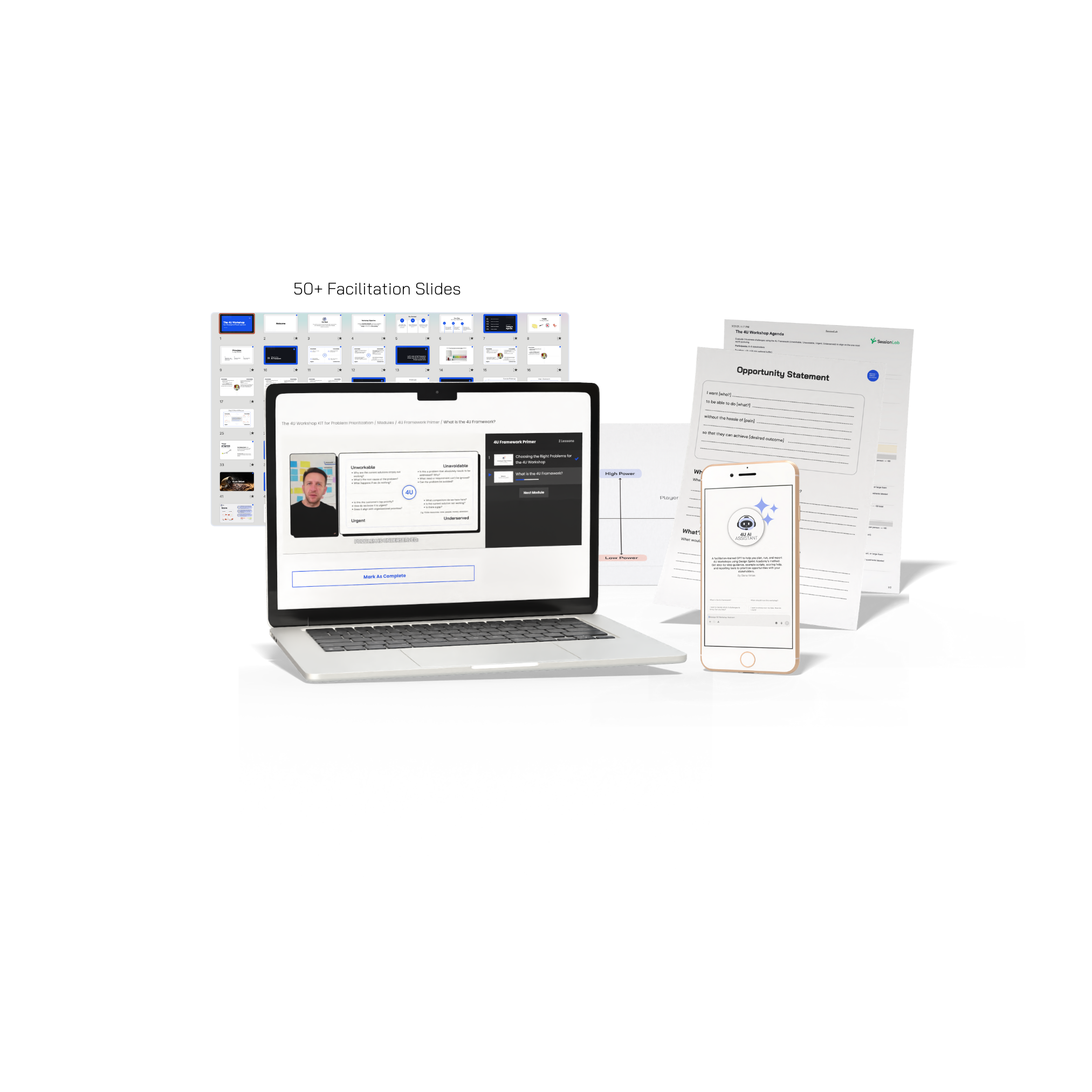

Your team has too many ideas and no defensible way to choose what matters first. • Senior leaders keep asking for more meetings, delaying the call, or changing direction after “alignment.” • Decisions get stuck because priorities and risk tolerance differ—and there’s no shared criteria to resolve trade-offs. The 4U Workshop gives you a simple decision lens:
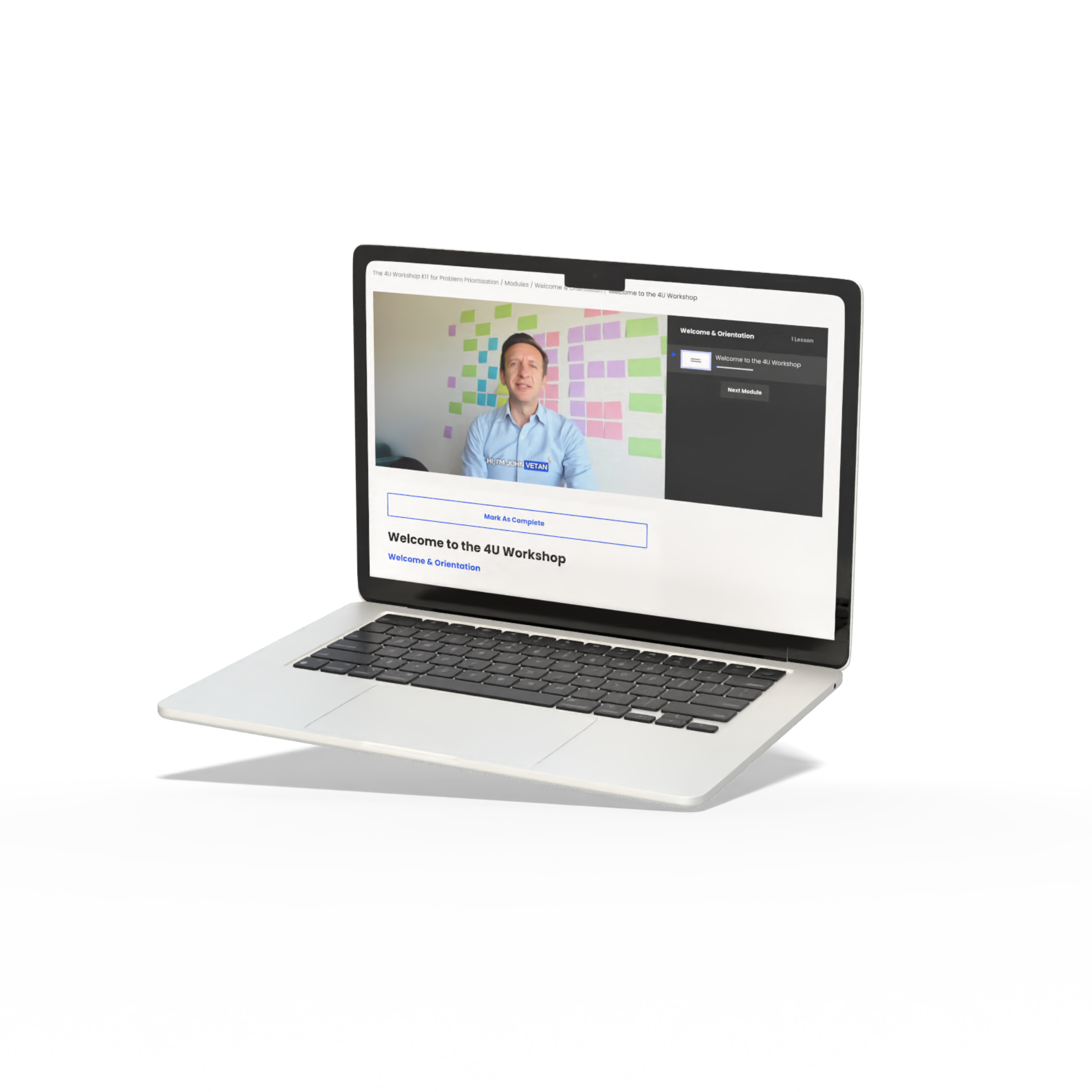
Short, focused lessons that teach you how to run the 4U Workshop with confidence—what to say, when to push, and how to guide senior leaders to a decision.
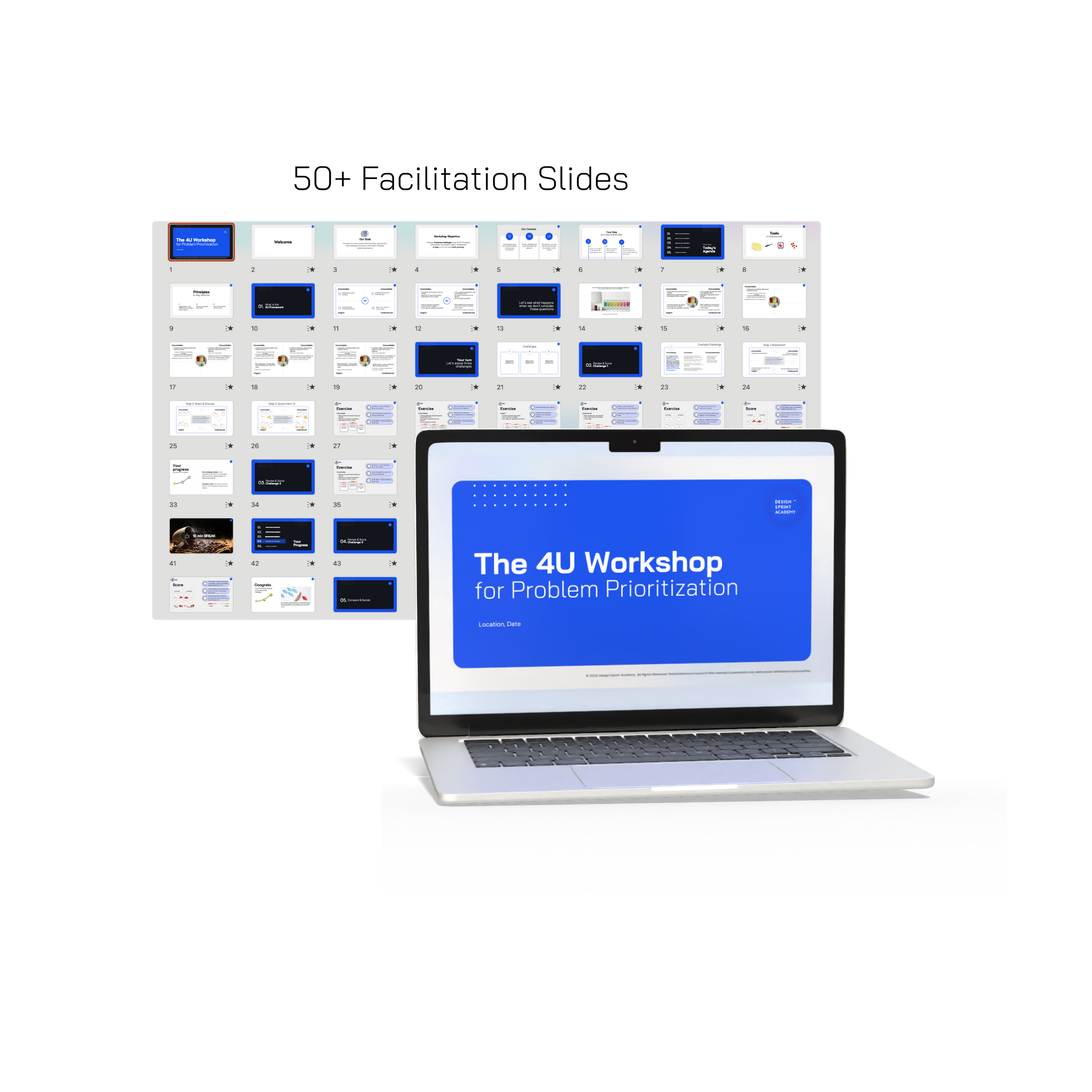
A complete slide deck you can use as-is to facilitate the session. Prompts, instructions, and decision logic are built in—so you’re not improvising in the room.
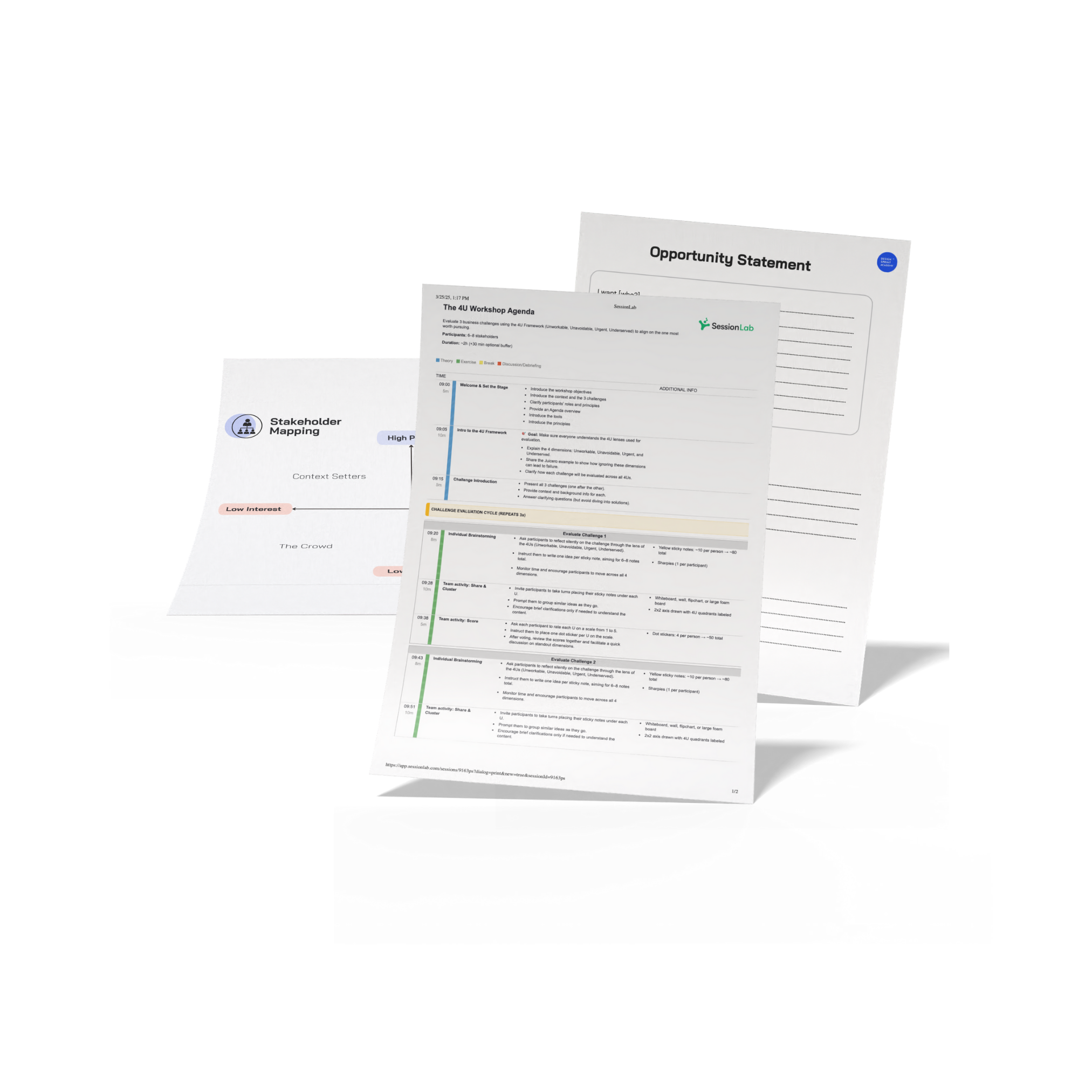
A minute-by-minute agenda that keeps the conversation tight, focused, and outcome-driven. Designed to prevent drift, debate spirals, and scope creep.
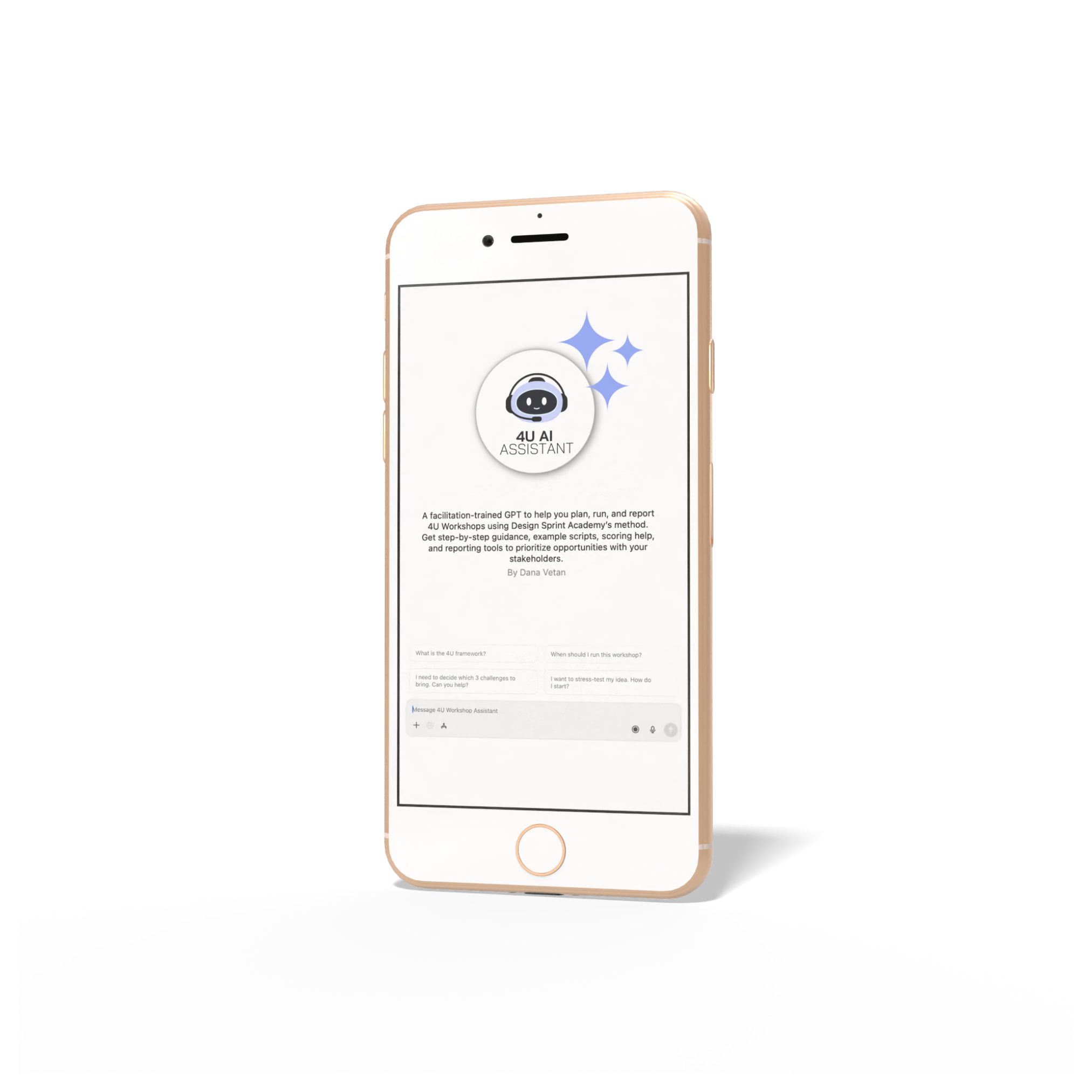
A built-in assistant trained on the 4U method to help you prep, facilitate, and synthesize—before, during, and after the workshop.
If you have any other questions or feedback, please contact us and we'll get back to you shortly.

Do I need senior leaders in the room for this to work?
Yes. This workshop is designed specifically for decisions that require senior alignment. The 4U method works because it makes trade-offs explicit and gives leaders a shared language to compare problems. Without decision-makers present, you’ll get discussion—but not commitment.
Is this meant for strategy, product, or innovation teams?
All three. The 4U Workshop sits before roadmaps, backlogs, or solution design. It’s most effective when teams need to decide what problem is worth solving next, regardless of whether the outcome feeds strategy, product discovery, AI initiatives, or innovation pipelines.
How is this different from prioritization frameworks like RICE or WSJF?
RICE and WSJF help prioritize solutions or features once the problem is already clear. The 4U Workshop is used earlier—when teams are still debating which problem even deserves attention. It helps leaders choose the right problem before investing time, budget, or teams.
What do teams walk away with after the workshop?
A clear, shared decision. Specifically: one Minimum Viable Opportunity—a problem the group agrees is worth validating next—plus documented reasoning that explains why this problem was chosen over the others.
How long does it take to prepare for the workshop?
Preparation is intentionally light. The kit includes a prep checklist, stakeholder guidance, and facilitation prompts so you know exactly what to do before the session. Most facilitators can prepare in under an hour once they’re familiar with the flow.
I’m not an “expert facilitator.” Can I really run this?
Yes. The hardest part of facilitation isn’t presence or confidence — it’s knowing exactly what to do next and how to explain it. This kit removes that uncertainty. You’re not improvising; you’re following a battle-tested structure. The playbook gives you the scripts, the slides guide the conversation, and the agenda manages the time. If you can run a meeting, you can run this workshop.
Can I customize the materials with my own branding?
Yes. We know that as a facilitator, your brand matters. The slide decks (PowerPoint) and worksheets are fully editable. You can add your logo, change the fonts to match your company style, and tweak the content to fit your specific client context.
I’m a consultant. Can I use this to run paid workshops for my clients?
Yes. Your purchase includes a Commercial Facilitation License. This means you are fully authorized to use these materials (slides, agendas, worksheets) to deliver high-value, paid workshops to your own clients. You can charge for the session, you just cannot resell or distribute the digital files themselves.


