Turner Construction — How to build an AI Operating Model that compounds

The starting point: 11,000 employees and decades of knowledge locked in people's heads
Turner Construction is one of the largest general contractors in the United States. When they engaged Design Sprint Academy, they had 11,000 employees and hundreds of active job sites. Decades of practical knowledge sat in the heads of experienced project managers, site supervisors, and directors who had solved similar problems hundreds of times. The challenge was making that knowledge available to others.
Turner’s leadership had already committed to building AI capability across the business. They saw an opportunity to make that knowledge easier to access and use. The ambition was there.
The challenge was the sequence:
Where do you start when the problem space is that large, the workforce is that distributed, and the pressure to show results is real?
It’s easy to start with tools. Or appoint a team, give them a mandate, and hope the work builds momentum.
Turner did something different. They started with problem framing.
What does an AI Operating Model look like in practice?
Our work with Turner followed three phases, each building on the last. Together, they helped establish an operating model Turner now runs independently.
Phase 1: Aligning leadership on where AI should focus
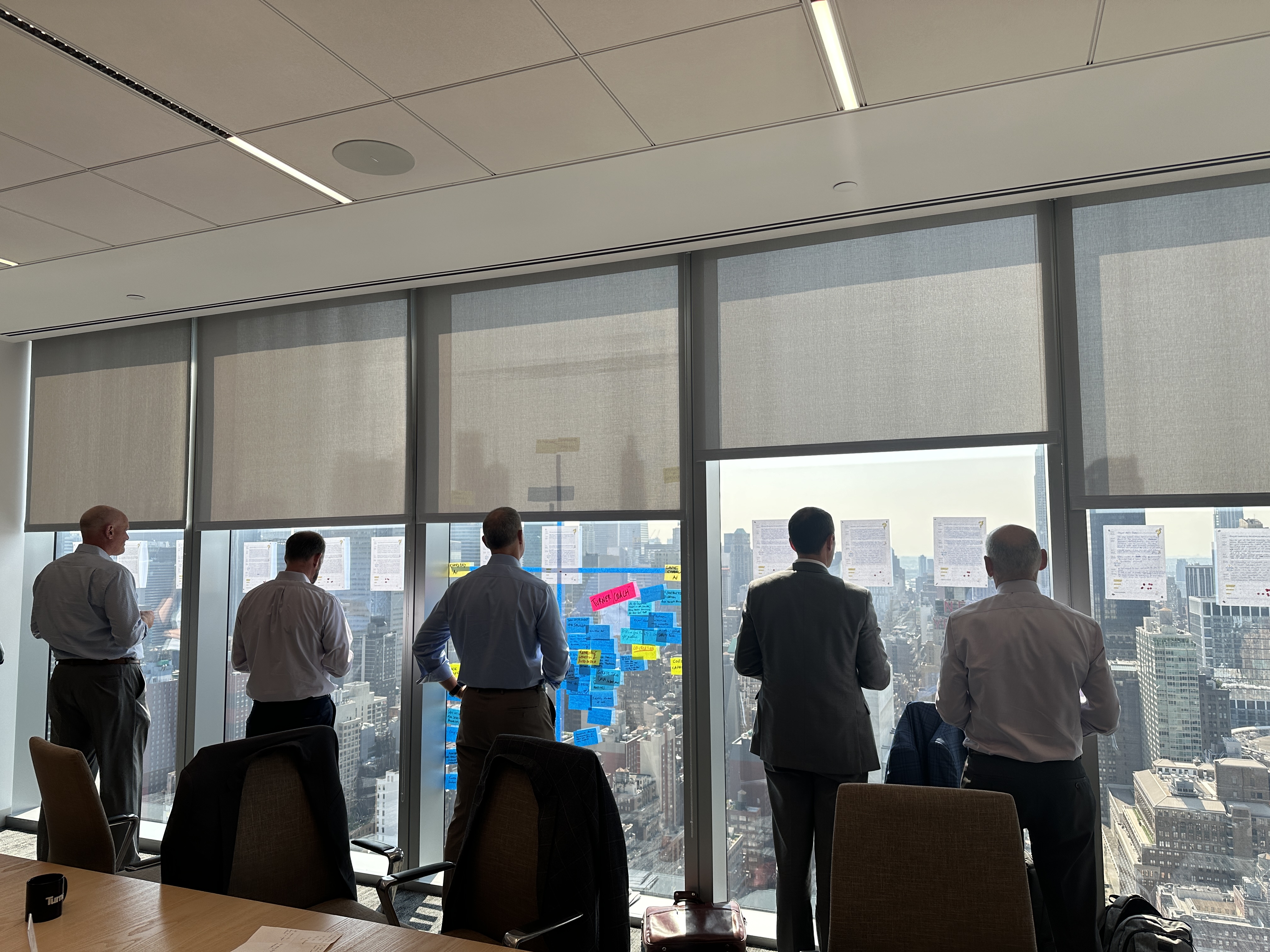
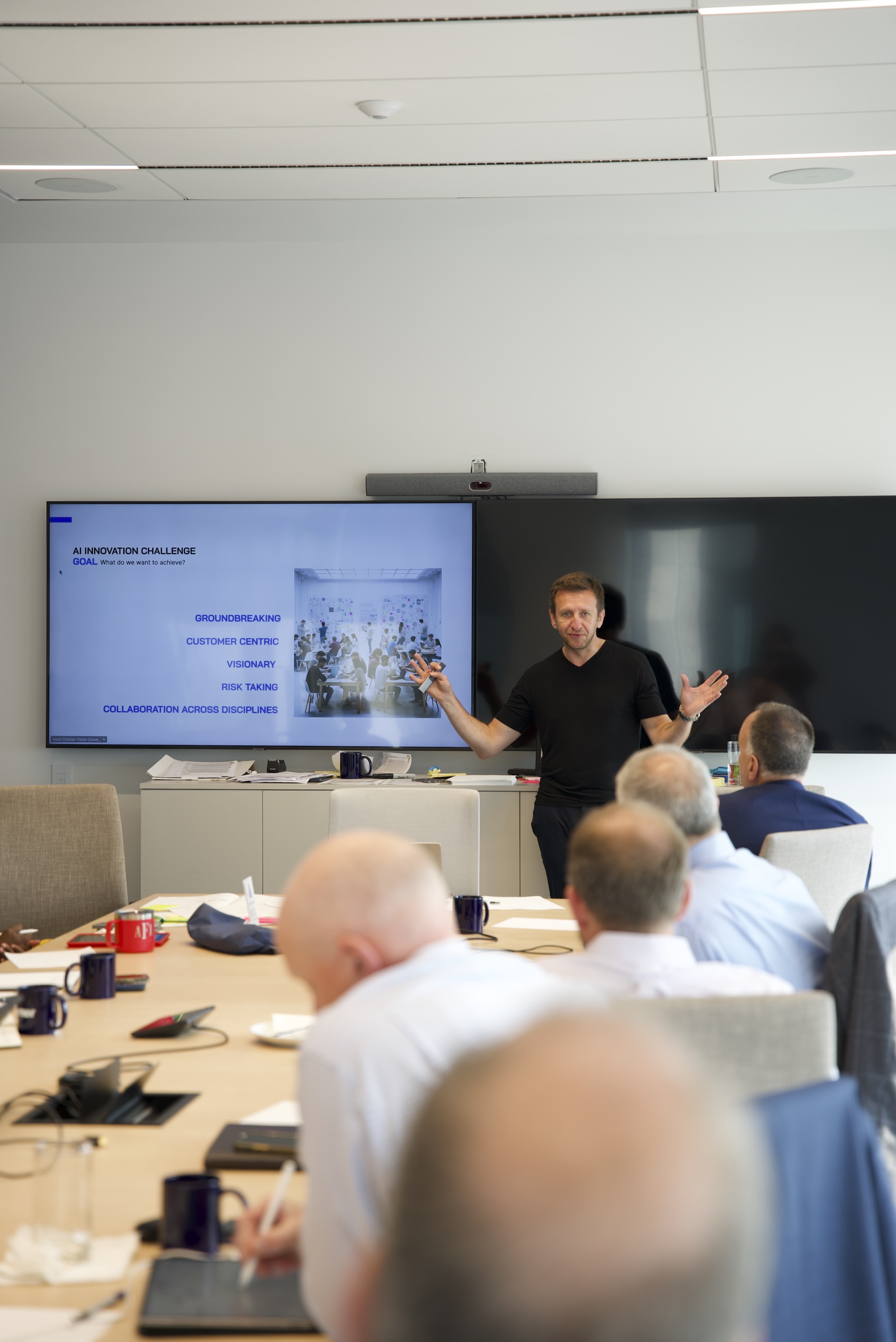
Before any practical work began, Design Sprint Academy used its AI Problem Framing method to help Turner’s Directors and VPs identify and prioritize opportunities. The goal wasn't to generate AI use cases. The goal was to get leadership aligned on which problems were actually worth solving — and which ones weren't.
This matters because teams can be asked to work on solutions before anyone has agreed on the problem. A use case may get attention because it’s technically interesting or has a senior sponsor. That doesn’t necessarily make it the best place to start. Turner’s leadership wanted to make that choice deliberately.
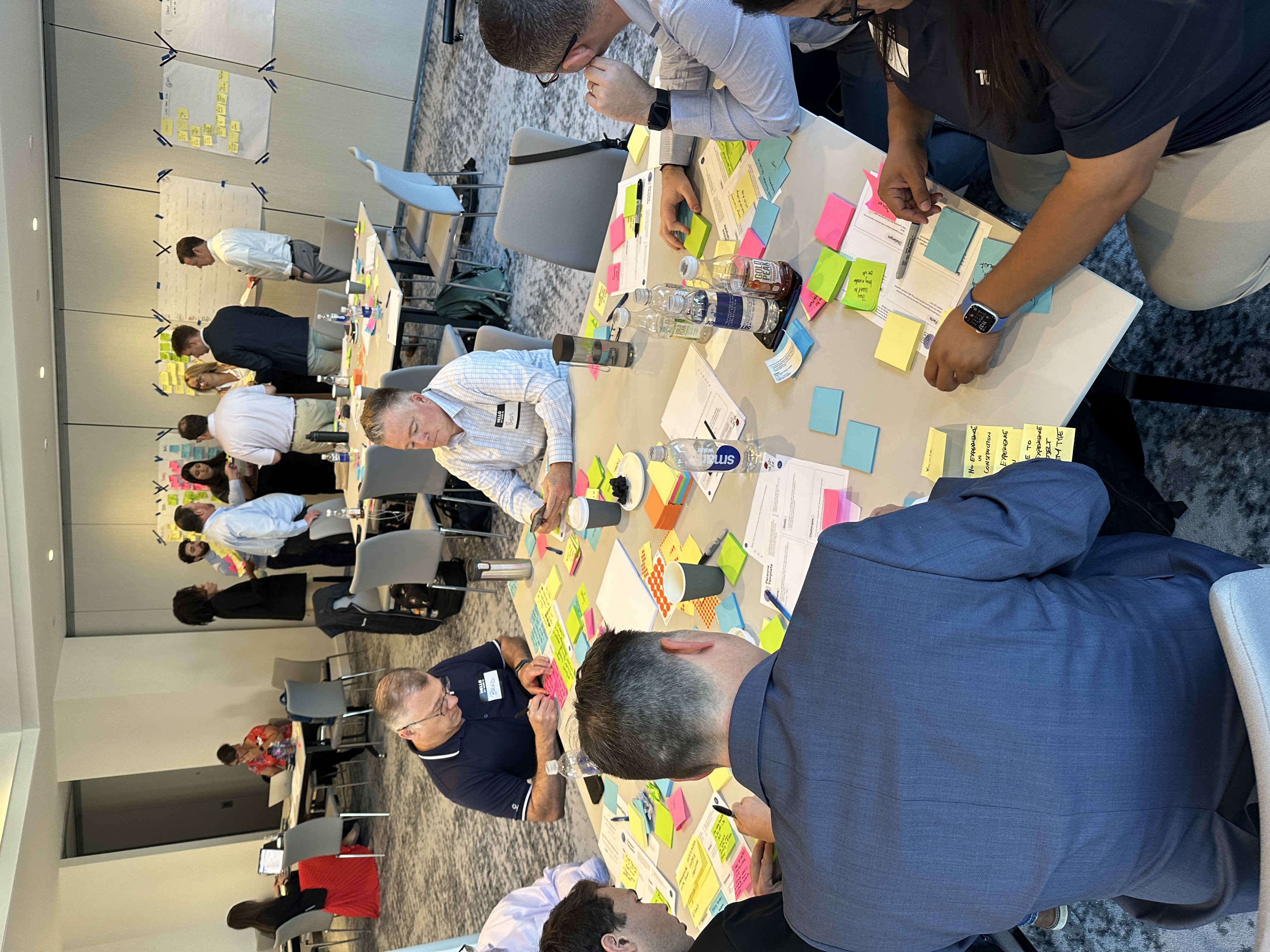
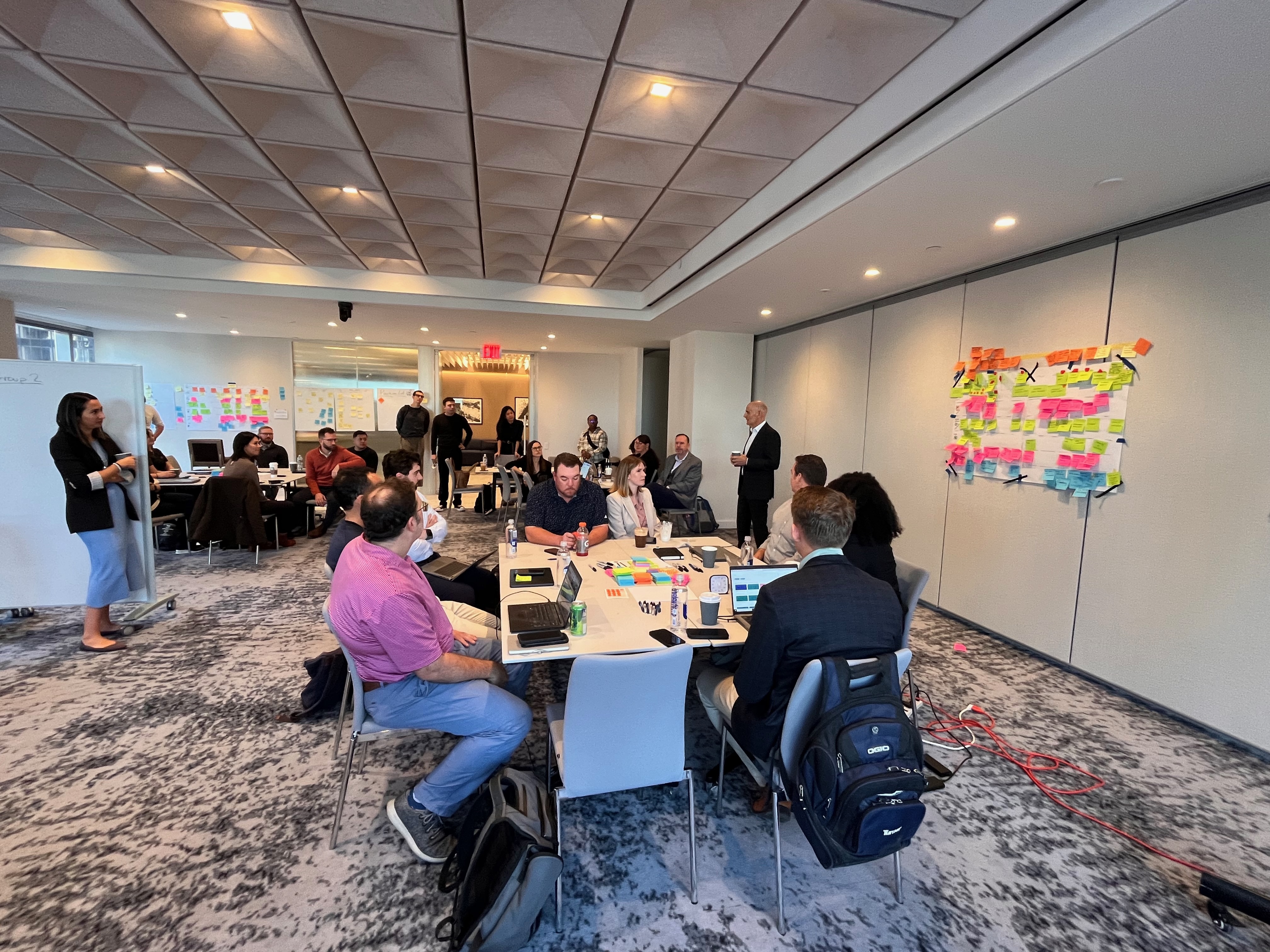
In DSA’s AI Problem Framing session, we brought the right people together to work through practical questions: Where is the workflow breaking down? What would improve if we fixed it? What data do we have, and can we use it? What governance requirements do we need to understand before building?
The group left with a prioritized set of AI opportunities and a written explanation of why each one was worth pursuing. That gave the teams a clear starting point for the work that followed.
Phase 2: Running AI Workflow Sprints across three teams
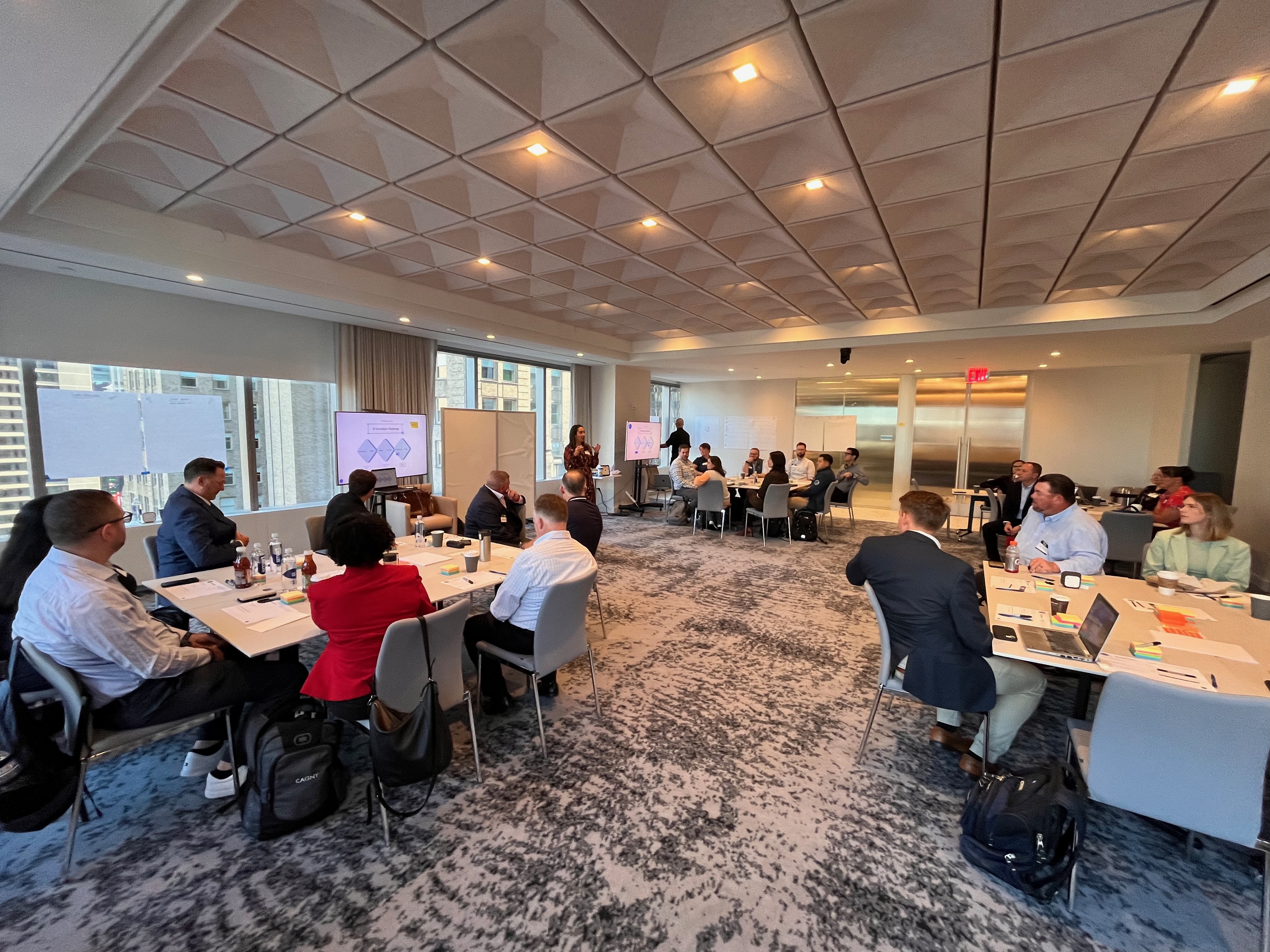
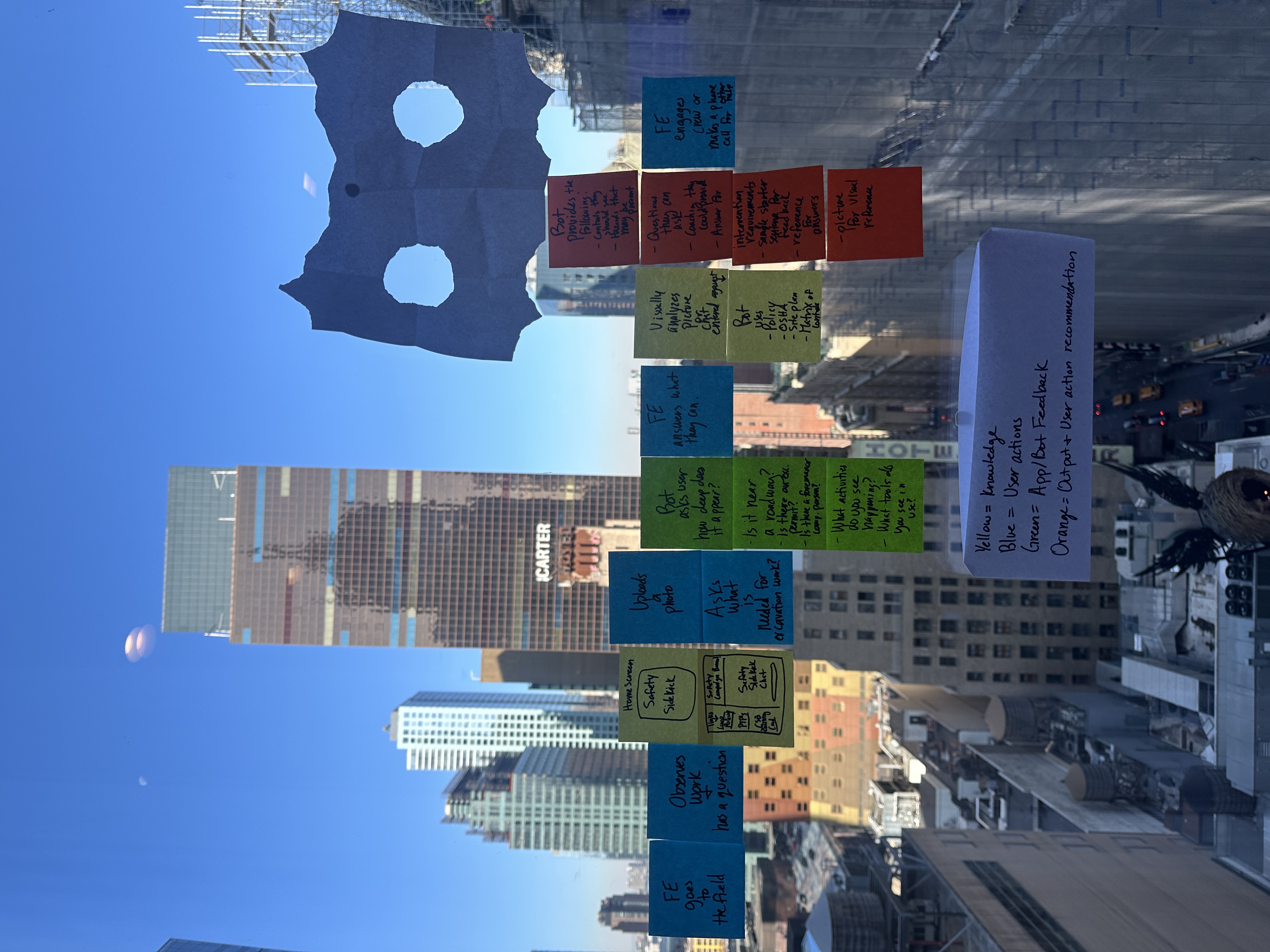
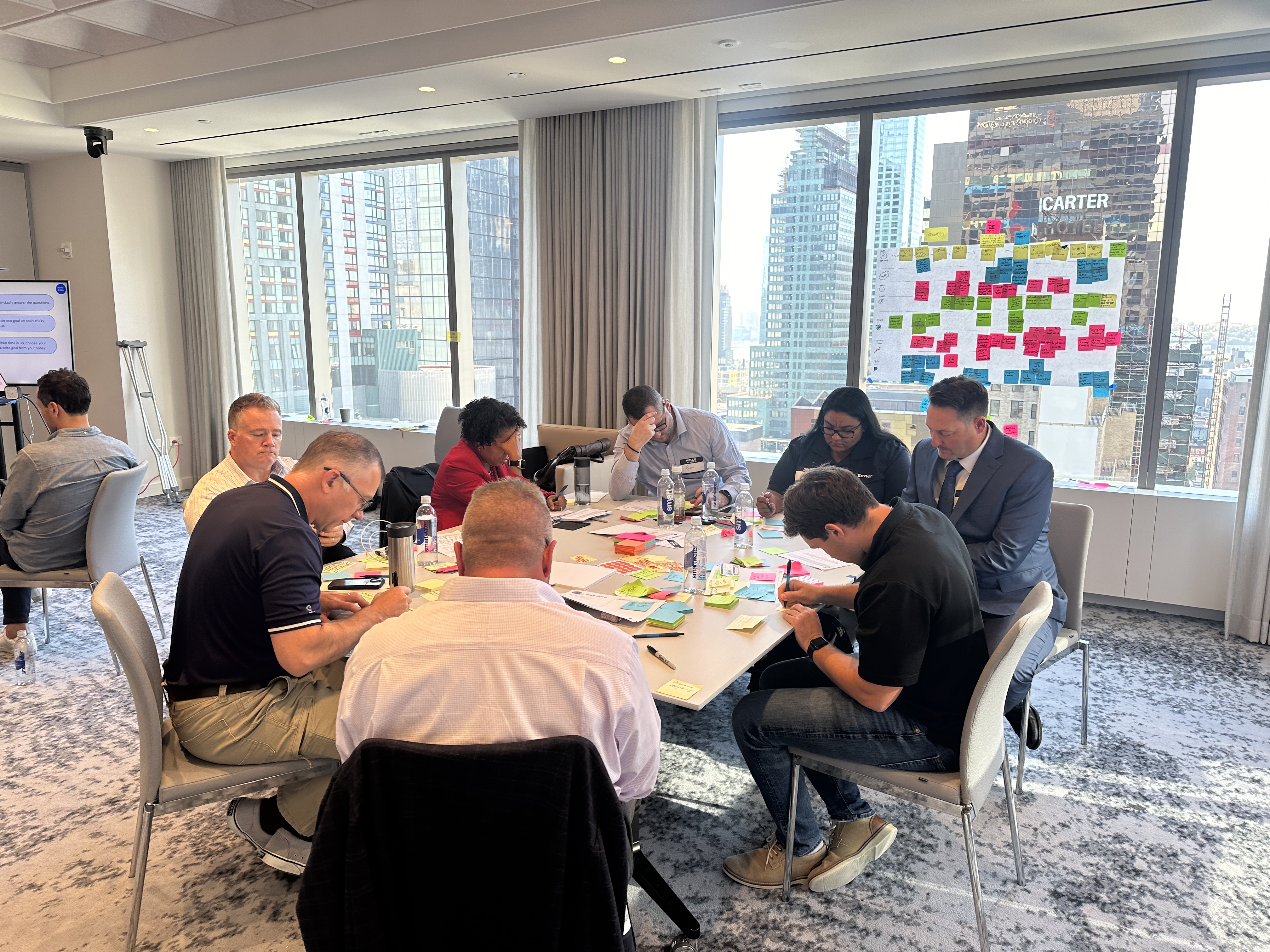
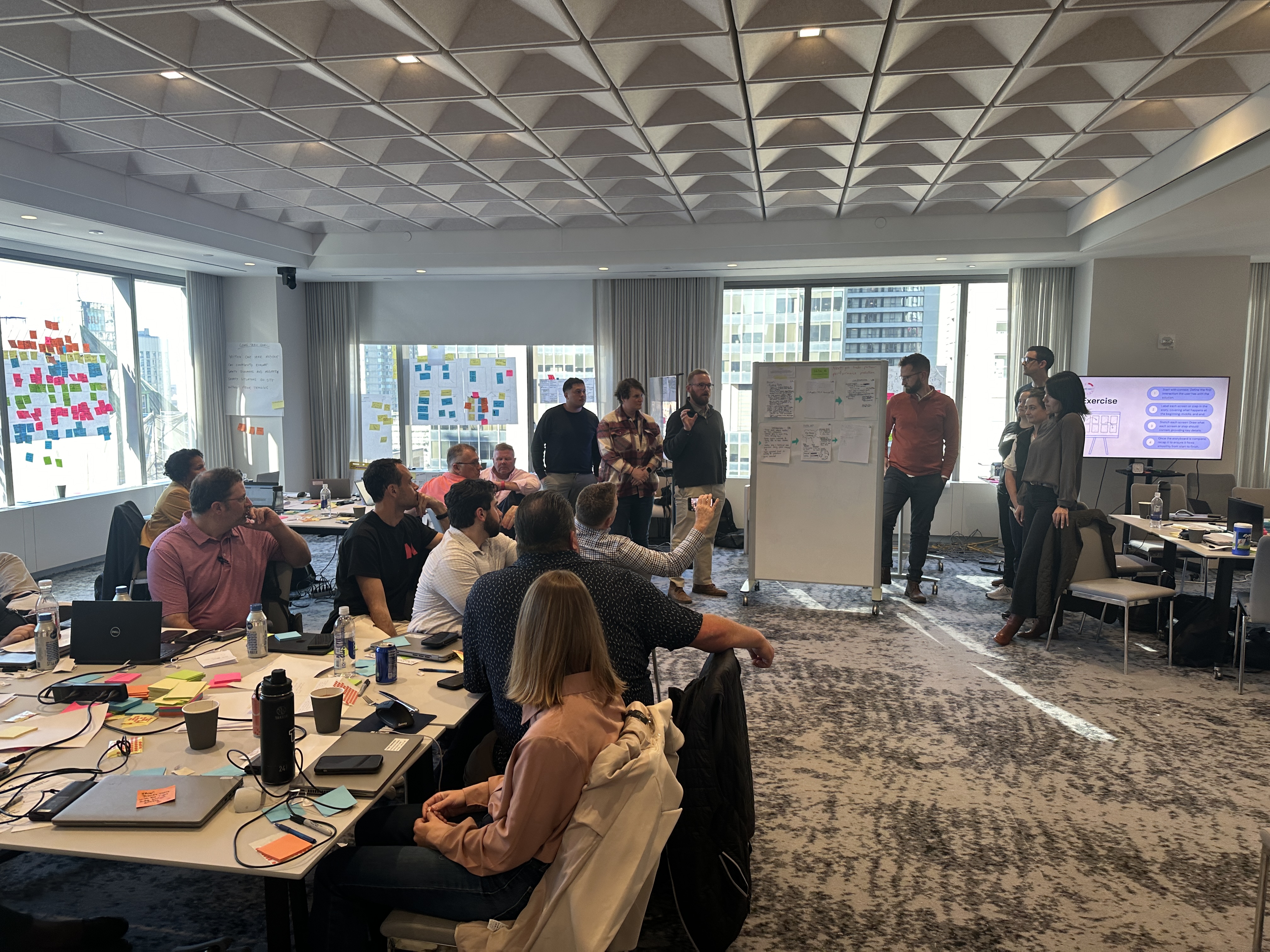
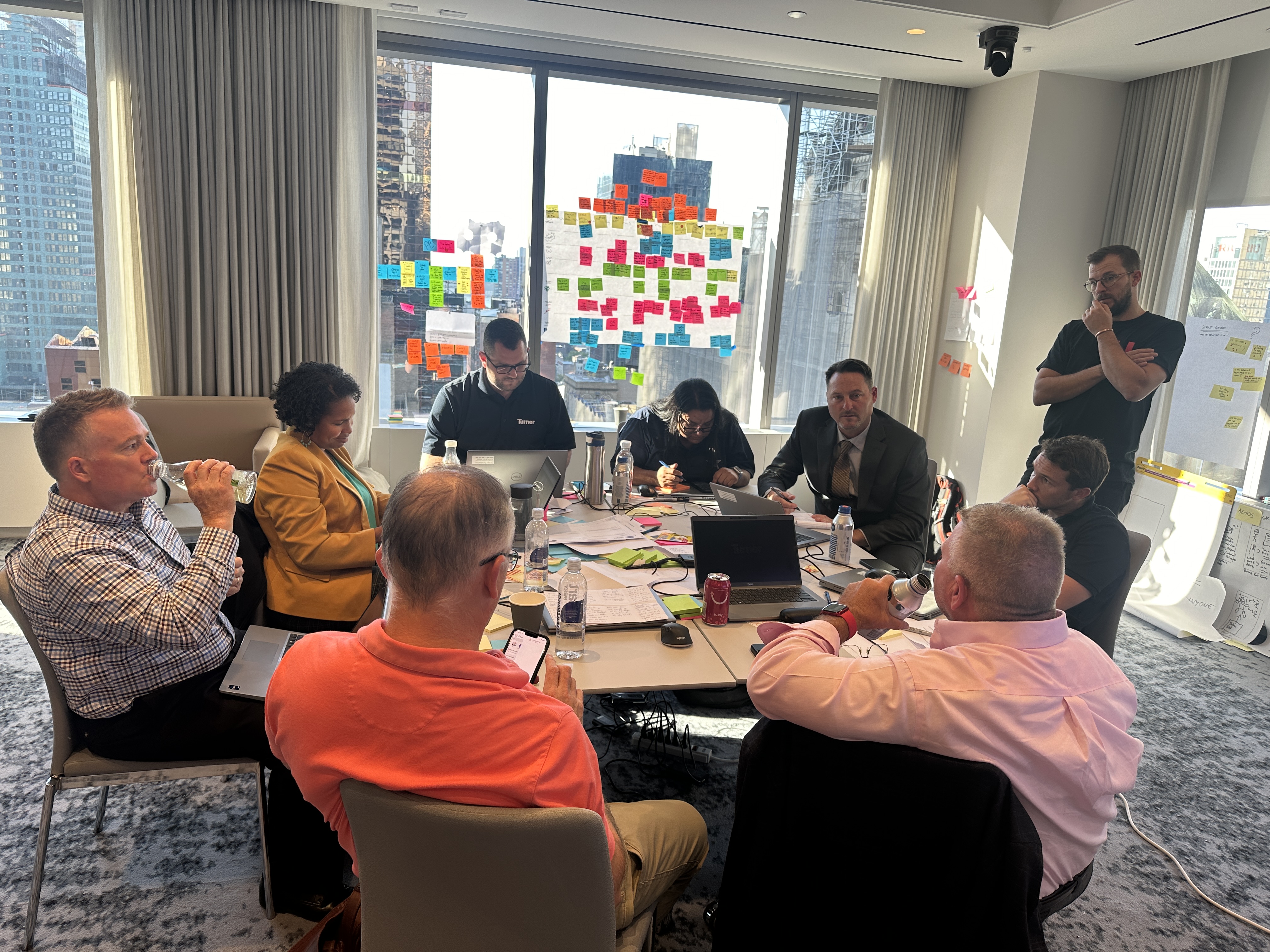
With the priority areas defined, Design Sprint Academy facilitated three AI Workflow Sprints, bringing cross-functional teams together to redesign workflows, prototype solutions, and test them with employees. Each sprint assembled a cross-functional Discovery Pod — domain experts, technical leads, data engineers, and the people who actually do the work that AI would be redesigning — and ran them through a structured four-day process.
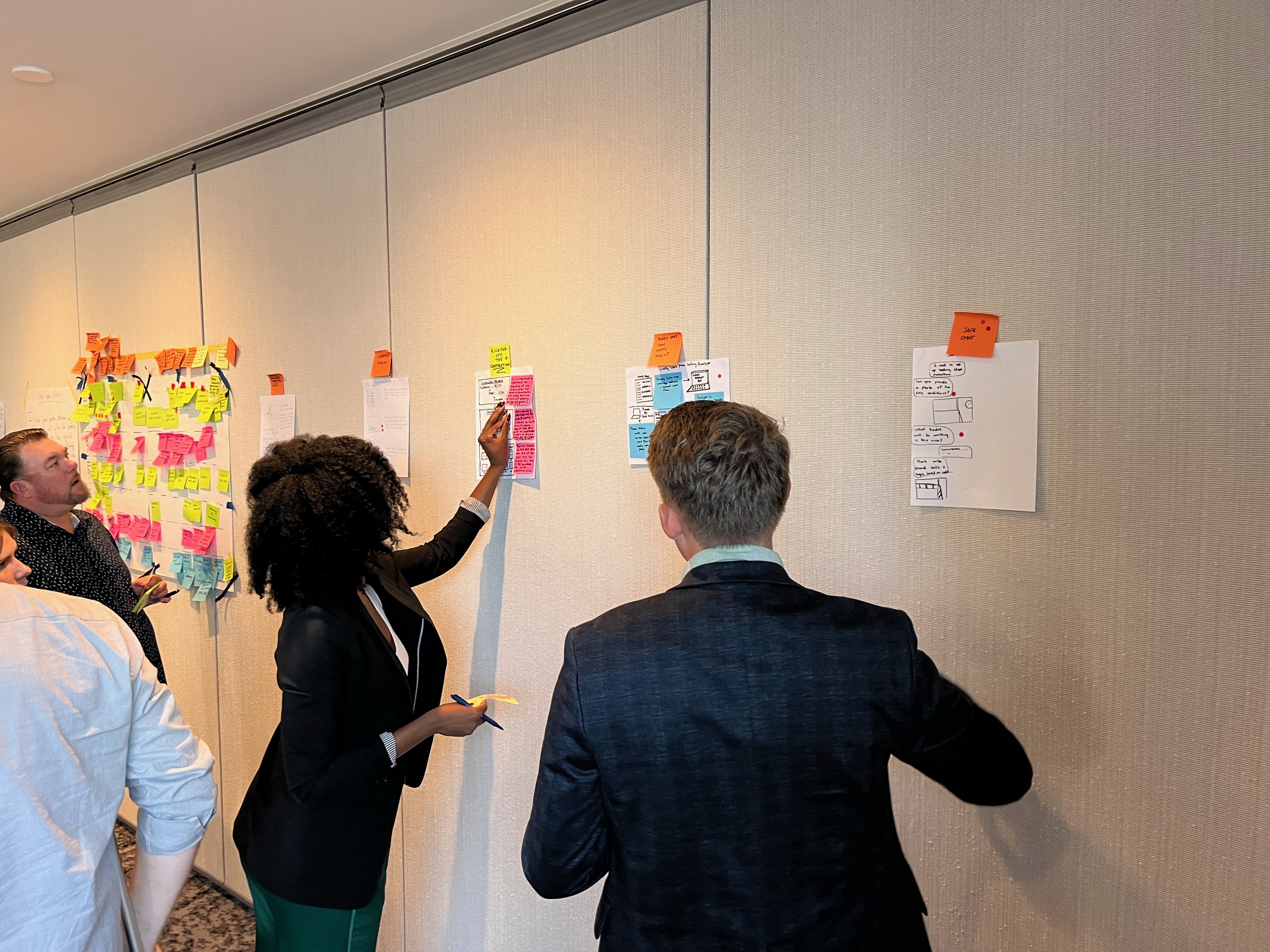
The first two days belonged to the Discovery Pod: mapping the current employee workflow, identifying where time and decisions were lost, redesigning the workflow with AI integrated, and converging on a specific solution concept. Day three was a build day — a working AI agent prototype built against the redesigned workflow. On the same day we also did the testing phase — structured sessions with real Turner employees, synthesized findings, and a clear Decider decision: scale, iterate, or stop.
The value of this process is getting to evidence quickly. Teams test a prototype, understand its limits, and make a clear decision within four days. Leadership can see what was tested and why the team recommends moving forward, making changes, or stopping.
Across three teams, Turner ran three full sprint cycles. Each produced an AI application tested against real workflows, with evidence of its value and a record of what still needed resolving before production investment.
Phase 3: Training Turner's own people to run the methodology
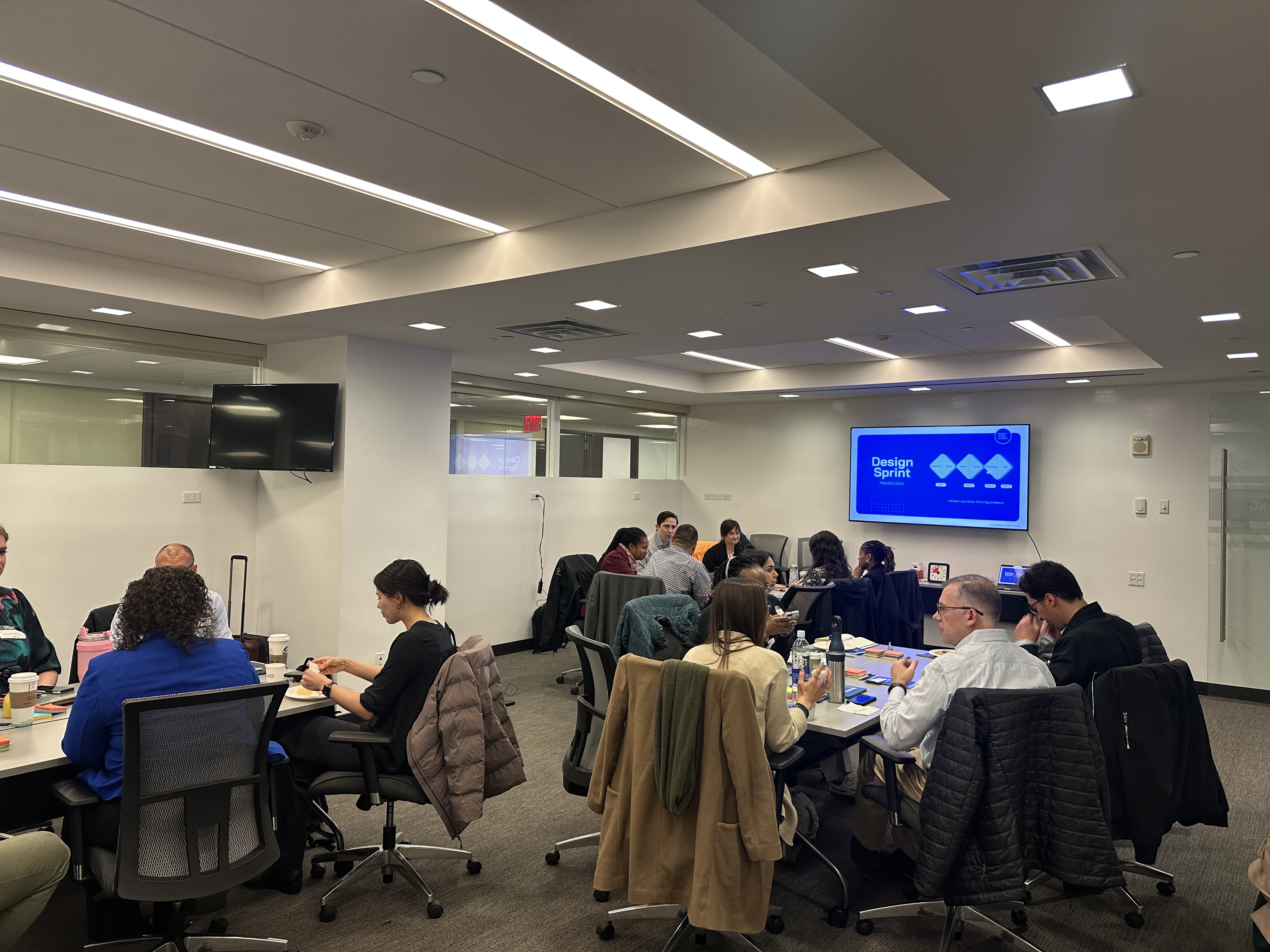
The third phase is what separates an AI Lab from a series of workshops. Design Sprint Academy trained Turner’s people to facilitate its methods independently — to lead AI Problem Framing sessions, assemble and orchestrate Discovery Pods, and run AI Workflow Sprints across teams without external support. This training established the internal facilitation capability behind Turner’s AI Lab.
This is the phase most organizations skip. They run successful sessions with an external partner, see the results, and then assume the capability will transfer naturally. It doesn't. Facilitation looks easier than it is from the outside. The discipline that makes a Discovery Pod produce a clean decision rather than a good conversation — the session design, the sequencing, the management of group dynamics, the protection against the failure modes that derail most AI discovery work (status battles and AI hype) — is a trained skill. It doesn't transfer by observation.
Turner invested in that training. By the end of the engagement, their internal AI Facilitators were running the system. DSA stepped back.
What did Turner's AI Lab produce?
Here’s what Turner’s AI Lab went on to produce.
400+ custom AI applications built internally, across business units, by Turner's own people — not outsourced, not built by a separate technical team.
70,000+ hours of annual capacity unlocked — operational time recovered across the business through AI-assisted workflows. That number is not a projection. It is the aggregate of validated outcomes from applications that survived the structured evaluation process and reached production.
An AI Lab operating model that runs without DSA today. Turner’s internal AI Facilitators bring Discovery Pods together, lead problem framing sessions, and run sprints independently. Their people now own the methods and know how to apply them.
These three outcomes are not independent. They compound because they're connected. The 400+ applications were produced through a system, not through scattered experimentation. The 70,000 hours of capacity were recovered because the use cases that reached production had been validated against real workflows before anyone committed to building them. And the operating model is running independently because Turner invested in training the people who run it, not just in running sessions.
Why most AI Initiatives don't get the same results
Other organizations can learn from Turner’s approach. The conditions behind it can be built deliberately.
An organization can invest in AI for years and still have a collection of disconnected tools, pilots, and training programs. Meanwhile, clients are asking for progress, competitors are moving, and leadership wants to know: we’ve been investing, so why isn’t this scaling?
One place to look is how the organization decides what to work on.
How do you decide what’s worth building before committing people, time, and money?
Without a shared process, each team can head in a different direction. It becomes difficult to compare opportunities or explain to leadership where the investment is creating value.
Turner built that system deliberately, in sequence: leadership alignment first, practitioner validation second, internal capability third. Each phase depended on the previous one. Each one compounded.
An AI operating model gives teams a repeatable way to explore opportunities alongside their day-to-day work. It helps them decide what is worth building with AI before committing significant resources.
"A healthy AI Lab stops more ideas than it ships." The point is to distinguish opportunities that create value from ideas that look promising in a presentation but don’t hold up in practice. Stopping an idea early is a useful decision. It can save the team months of work on a pilot that was unlikely to succeed.
Turner's 400+ applications are the ideas that made it through. The ones that didn't make it through saved the organization the cost of finding out the hard way.
What can other organizations take from Turner's experience?
Here are the principles other organizations can take from Turner’s experience.
Start with leadership alignment, not practitioner enthusiasm.
Leadership needs to agree on which business outcomes matter and give teams the backing to pursue them. DSA’s AI Problem Framing method helps leaders make those priorities clear, so teams know where to focus and why.
Validate before you build.
DSA’s AI Workflow Sprint is designed to produce a tested prototype and a clear decision before a team commits to a full build. Finding weak ideas early helps teams focus their engineering time on opportunities with evidence behind them.
Internal capability is the only durable outcome.
Lasting capability comes from people who can lead this work themselves. Training internal AI Facilitators allows teams to work across business units without waiting for an external partner. Turner invested in that capability. That’s why the Lab can run without DSA today.
The operating model compounds; individual sessions don't.
One Discovery Pod produces a decision. Repeated across teams and over time, that work builds a record of what was explored, stopped, tested, and put into production—with the reasoning behind each decision. Leadership can use that record to review progress and guide the next investment.
How does an AI Lab Operating Model work?
Design Sprint Academy’s AI Lab approach gives organizations a repeatable way to evaluate AI opportunities, test promising ideas, and develop the skills to keep doing this independently. It combines AI Discovery Pods—cross-functional teams brought together around a specific challenge—with trained AI Facilitators and methods such as AI Problem Framing, AI Workflow Sprint, and AI Design Sprint. Teams choose the method that fits the question they need to answer.
The Lab runs alongside the core business. Setting it up doesn’t require a reorganization or new reporting lines. People join Discovery Pods for defined periods, then return to their usual roles.




.png)