ELM Company — Two years of building innovation capability in Saudi Arabia

ELM and the context that makes this engagement specific
ELM Company is one of Saudi Arabia's leading technology organizations, operating at the intersection of digital services and public sector transformation. Its work spans government digitization, identity verification, and the technology infrastructure that underpins large-scale national services.
The challenges its teams navigate are complex, multi-stakeholder, and high-stakes. The cost of moving in the wrong direction isn't a failed product release — it's wasted public investment and delayed services at national scale. When ELM decided to invest in structured innovation capability, the bar for what the training needed to produce was correspondingly high.
Why Design Sprints work in Saudi Arabia — and what they have to navigate
Before getting into the program itself, it's worth understanding the cultural terrain. Saudi Arabia has deep-rooted values of community and collaboration — historically, survival in harsh desert conditions depended on collective intelligence, close-knit support systems, and working together as necessity rather than preference. That orientation resonates directly with how Design Sprints are built: diverse teams, pooled strengths, fast decisions made together.
But there are genuine tensions worth naming.
Tradition and the status quo. In collectivist cultures, challenging established norms can feel disruptive in ways it doesn't in more individualist environments. Design Sprints run on productive disruption — the assumption that the current answer isn't good enough and needs to be stress-tested. Facilitators working in this context need to create space where bold ideas can surface without alienating participants who feel the weight of existing ways of working.
Top-down versus grassroots. Many of Saudi Arabia's most visible innovations are centrally driven — large-scale, leadership-initiated, nationally coordinated. Design Sprints work differently: they cultivate innovation from within cross-functional teams at every level. For ELM, a company at the intersection of government mandate and operational delivery, this tension is live. The goal of the training wasn't to replace top-down direction with bottom-up chaos — it was to build the grassroots capability that makes top-down ambition executable.
The pace of change. Vision 2030 sets an ambitious timeline for transformation. But organizations that have operated at the tempo of government services don't automatically shift to the iterative, experiment-fast cadence that Design Sprints require. The accelerated sprint format ELM used — compressing the full process into two days — was partly a response to this reality: giving teams the experience of moving fast without asking them to abandon the deliberateness their environment rewards.
What the ELM engagement demonstrated is that these tensions don't prevent Design Sprints from working in Saudi Arabia. They shape how the facilitation has to be done. And when that facilitation is sensitive to the cultural context, the collaborative instinct already present in Saudi teams becomes a genuine asset.
The program: what ELM invested in
In 2023, Design Sprint Academy delivered its first training program in Saudi Arabia, with ELM as the client. The goal was not to introduce agile tools but to embed a complete innovation methodology — one ELM's teams could run independently.
The program covered three modules in sequence, each building on the previous one.
Problem Framing taught teams to define the challenge worth solving before any solution work began — surfacing assumptions, aligning stakeholder perspectives, and converting broad, overwhelming problems into specific, actionable statements. In an organization navigating complex public sector mandates, this upstream discipline determines whether everything that follows is headed in the right direction.
Design Sprint Training ran in an accelerated two-day format — every phase of the full sprint compressed into a tighter window. Teams mapped the challenge, ideated individually before sharing with the group, made decisions, built prototypes using Uizard AutoDesigner (now part of Miro), and tested them. The time pressure was deliberate: it built the tolerance for moving forward under uncertainty that makes the method usable in practice, not just in training.
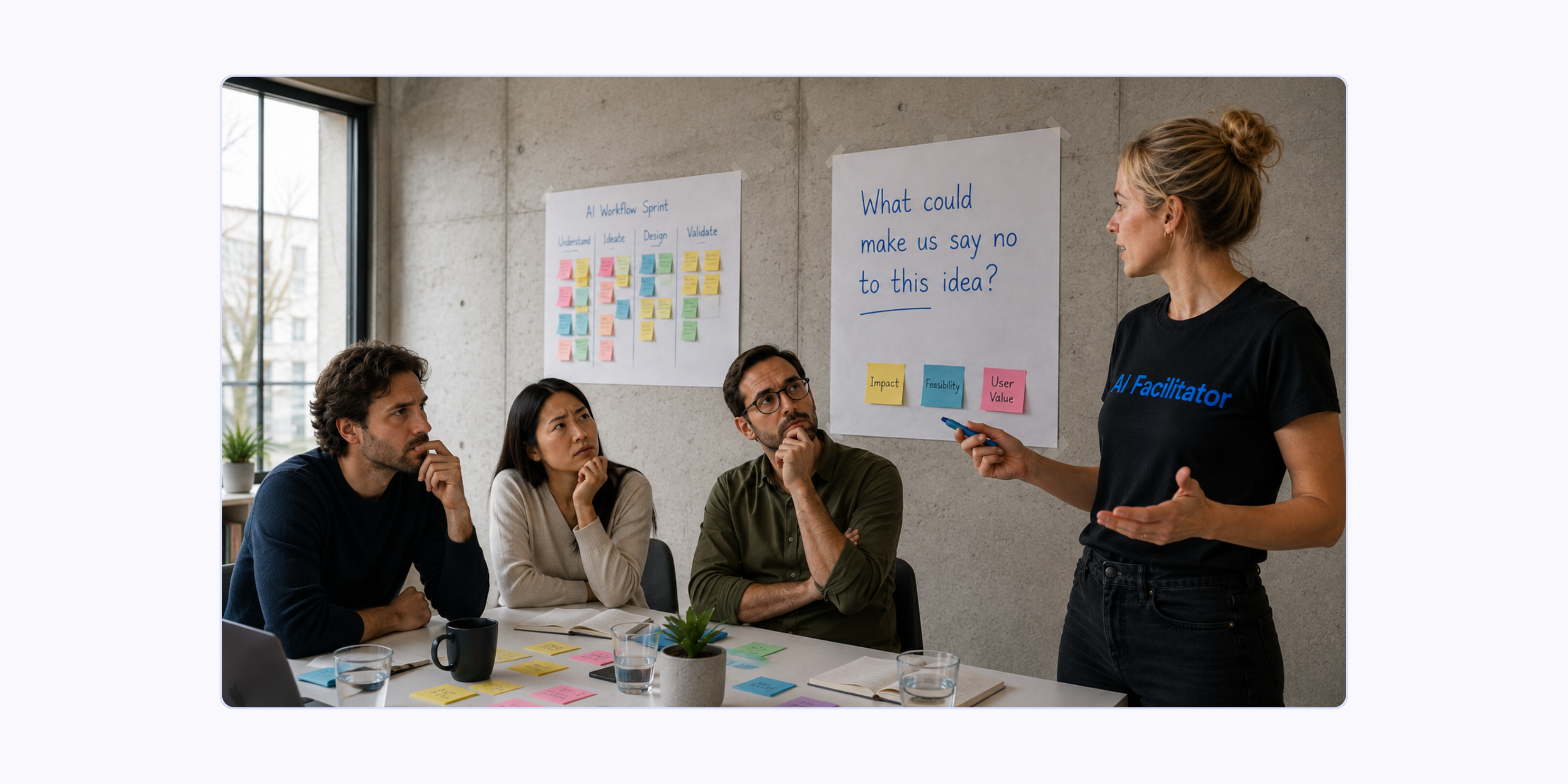
Facilitation Training was the module that turned participants into people who could lead the process themselves — managing group dynamics, holding the structure when rooms get tense or divergent, and maintaining momentum through the moments that derail sprints when run without an experienced hand.
By the end of 2023, teams were applying the method. Individuals who had entered as participants were stepping into facilitation roles. The question was what to do next.
What the return engagement signals
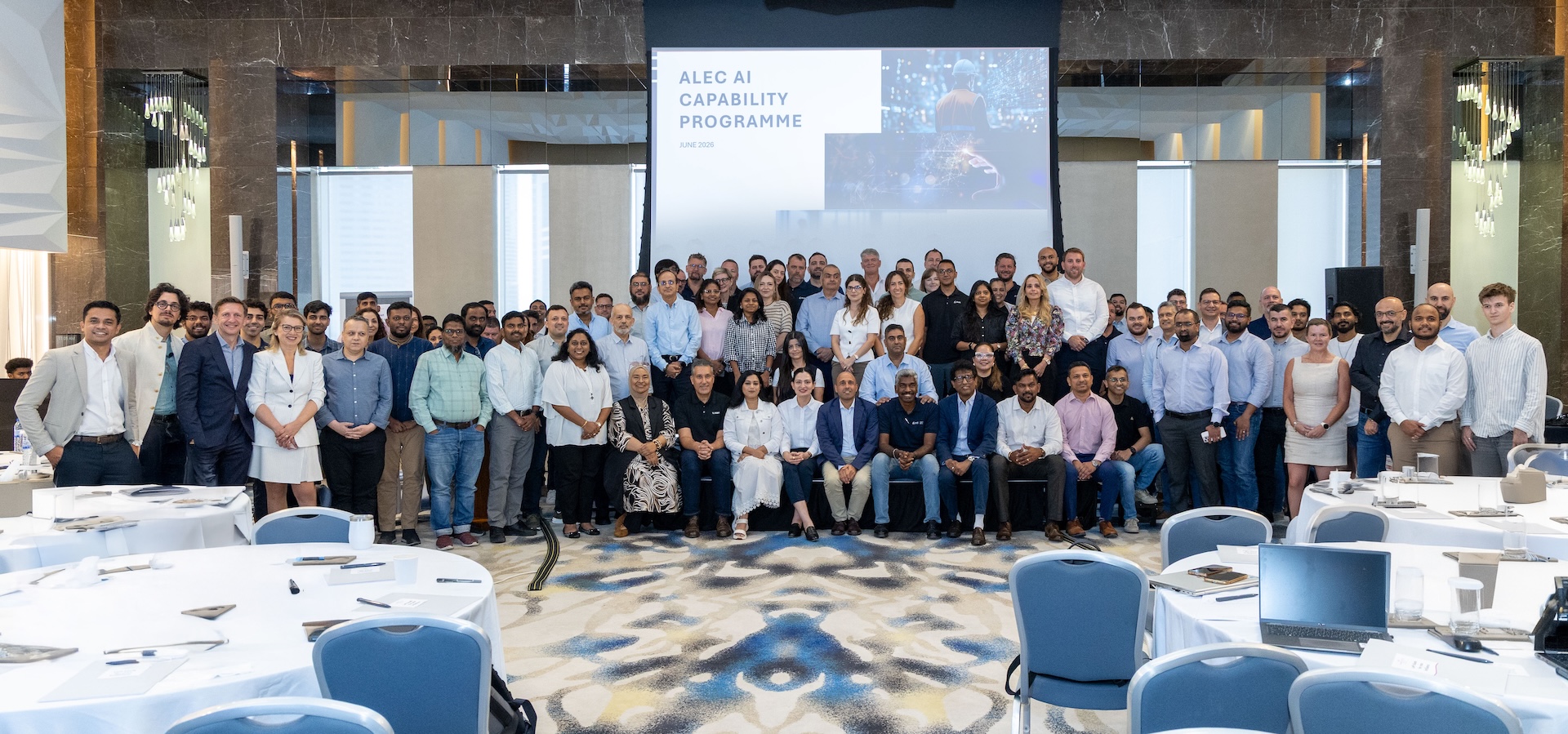
In 2024, ELM invited Design Sprint Academy back to Riyadh. Same program. New teams. Uizard AutoDesigner 2.0 (now part of Miro) in the prototyping phase, compressing the prototype-to-feedback loop further than had been possible the year before.
A return engagement of this kind carries a clear message: the first year worked, and the organization wanted more people inside the circle.
This is how innovation capability actually scales inside a large organization. A single training cohort produces a group of practitioners. A second cohort joins an organization where the method is already being practiced, where internal facilitators exist, and where the shared language — problem framing, sprint structure, prototype and test — is already in use. The 2024 participants didn't start from zero. They joined a growing community of people who had already run the process.
For ELM specifically, the 2024 investment also reflected the Vision 2030 context: sustained capability building, not one-off intervention. The ambition of the national transformation program requires organizations that can keep innovating from within — not organizations that bring in external teams for each new challenge and start over each time.
What made scaling possible: the facilitation kits
Training equips people with the method. What allows them to actually run it at scale — independently, repeatedly, across different teams and challenges — is having everything they need ready to use without rebuilding it from scratch each time.
ELM's facilitators left the program equipped with two complete kits.
The Design Sprint Facilitation Kit covers the full sprint facilitation workflow: 400+ customizable presentation slides, comprehensive agendas, checklists, and templates refined across hundreds of real sprints. A facilitator running their first session after training doesn't need to figure out the structure — it's already there. They can focus entirely on reading the room and leading the conversation, which is where experience matters most.
The Problem Framing Kit, available at problem-framing.com, covers the full Problem Framing workshop system: 200+ workshop slides, templates, and agendas that allow a facilitator to run a high-impact session that aligns stakeholders and produces a clear problem statement in a single day.
Together, the two kits cover the complete methodology arc — from problem definition to tested solution direction — in a format that internal facilitators can pick up and run. This is what separates a training program that produces capability from one that produces intention. The kits remove the operational friction that causes even well-trained facilitators to hesitate before the first session, and keep hesitation from compounding into disuse.
Two years of three-module training across multiple cohorts doesn't produce a finished capability — it produces a foundation and a trajectory.
The internal facilitators trained across both years represent a distributed capability that doesn't depend on any single team or any external partner. The shared methodology creates a common reference point for how ELM approaches complex challenges — one that travels across functional boundaries and compounds with each sprint cycle.
For an organization operating at ELM's scale and complexity, that coherence is not a soft benefit. It's what makes the next sprint faster, the next decision better calibrated, and the next cohort of trainees easier to bring up to speed. The community of practice is the product. Everything else is what it makes possible.