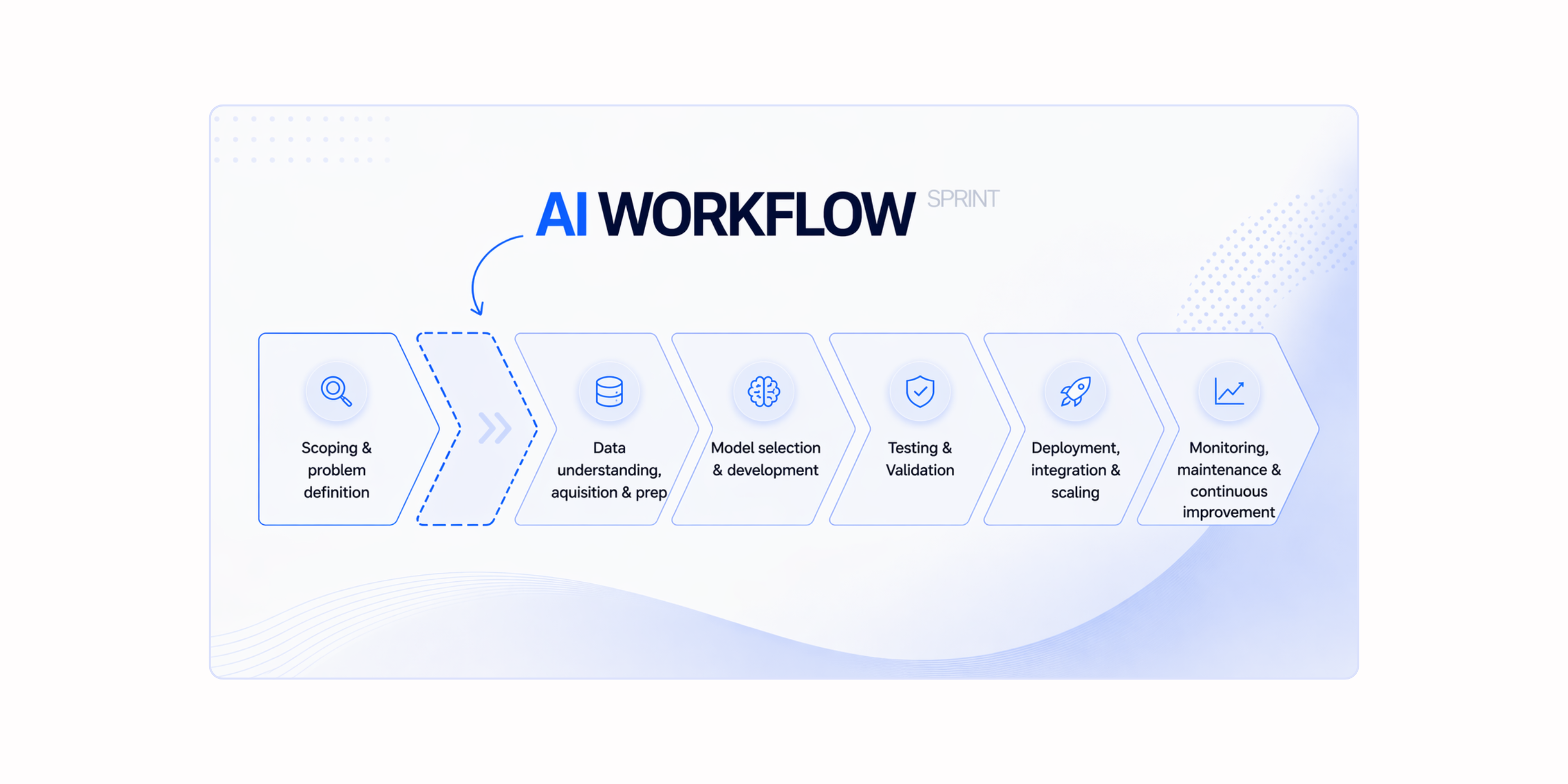
AI vendors and internal IT teams are expected to turn business requests into working AI solutions. But those requests don't always come with a clear definition of the business problem, how the workflow should change or what needs to be built.We give engineering teams a structured discovery method to work more consultatively and define a clearer scope before implementation.
A business unit says, “We need an AI agent.” A client asks to automate a process. Technical teams can start exploring solutions quickly — but the information needed to scope the right build is often still missing.
What business problem are we solving? How does the workflow actually run? Where is the friction? What should change before anything is automated? Which constraints matter? What would success look like?
A good discovery process answers those questions before engineering commits to expensive builds. But getting from an initial request to a clear scope involves three practical challenges.
Technical teams often receive a solution-shaped request. Before it becomes a scope, someone needs to clarify the outcome, the people affected and the problem underneath it.
Clients often ask to automate a process as it works today. Technical teams need to work with the people doing the job to understand the steps, handoffs and exceptions, challenge what isn't working and redesign the workflow before deciding what to automate.
Many technical teams already do discovery, but the approach can vary from project to project. A common method helps teams run discovery consistently and produce well-defined scopes across different projects, clients and business units.
This training is for engineers, solution architects, technical consultants and AI or automation specialists working in AI vendors, implementation partners and internal IT teams who are expected to:
Identify and prioritise valuable AI use cases by looking beyond the initial request to understand the business problem, expected value and constraints before proposing a solutio
Facilitate discovery workshops with clients and business teams by bringing decision-makers, domain experts and technical specialists together to explore opportunities and agree on what is worth building.
Redesign workflows before implementation by working with domain experts and the people doing the work to challenge existing processes and determine what should change with AI.
Apply a consistent process for scoping AI projects so discovery follows a common approach across different consultants, client engagements and internal projects, rather than depending on who happens to lead it.
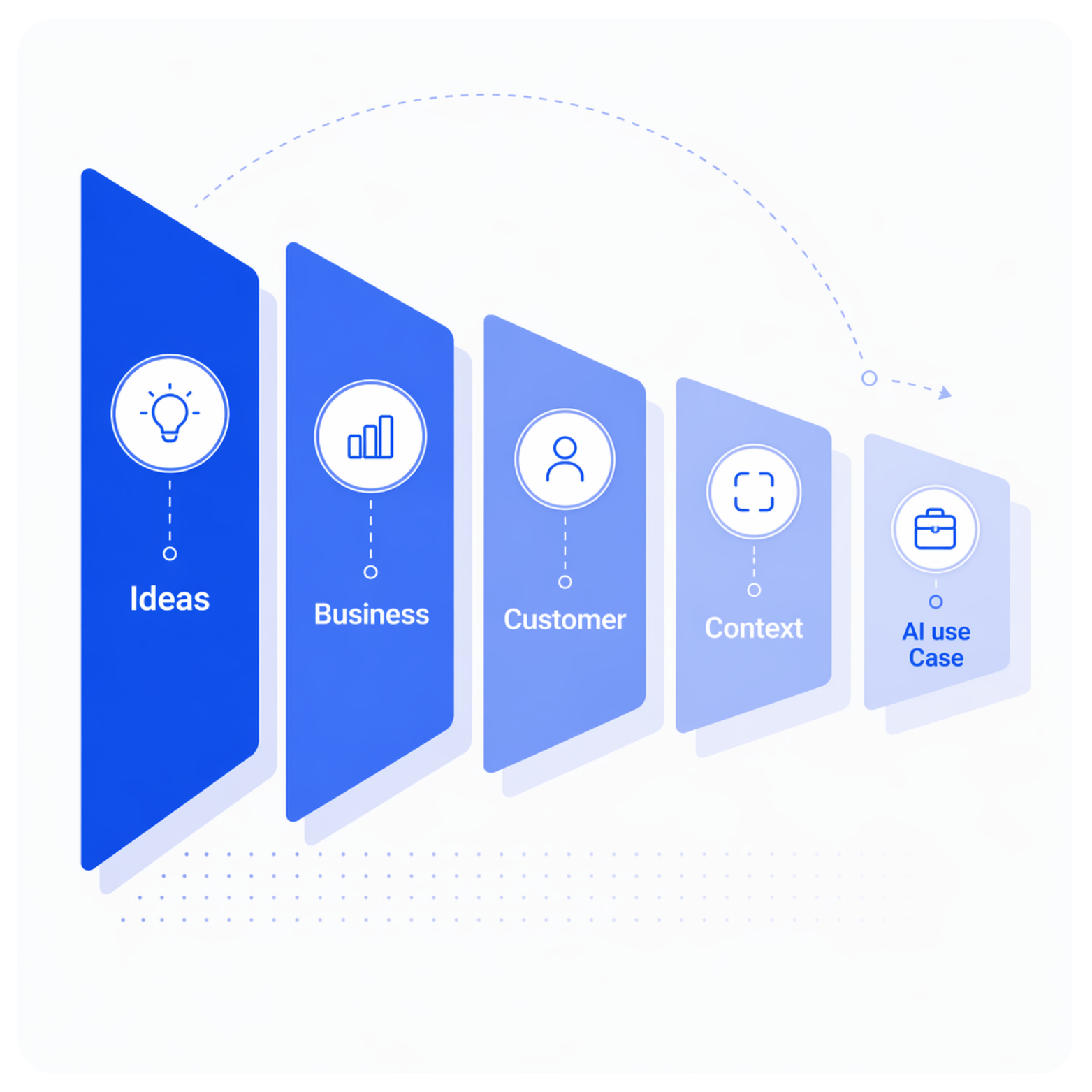
Participants learn to guide a cross-functional team from scattered AI ideas to a shortlist of well-defined, prioritized use cases.
They practice connecting AI opportunities to business goals, understanding the people affected and the problems they face, and evaluating potential value, feasibility and data constraints.
Along the way, they learn how to structure discussions, manage different perspectives and guide teams toward decisions. The outcome is an AI Use Case Card that leadership and delivery teams can assess and act on.
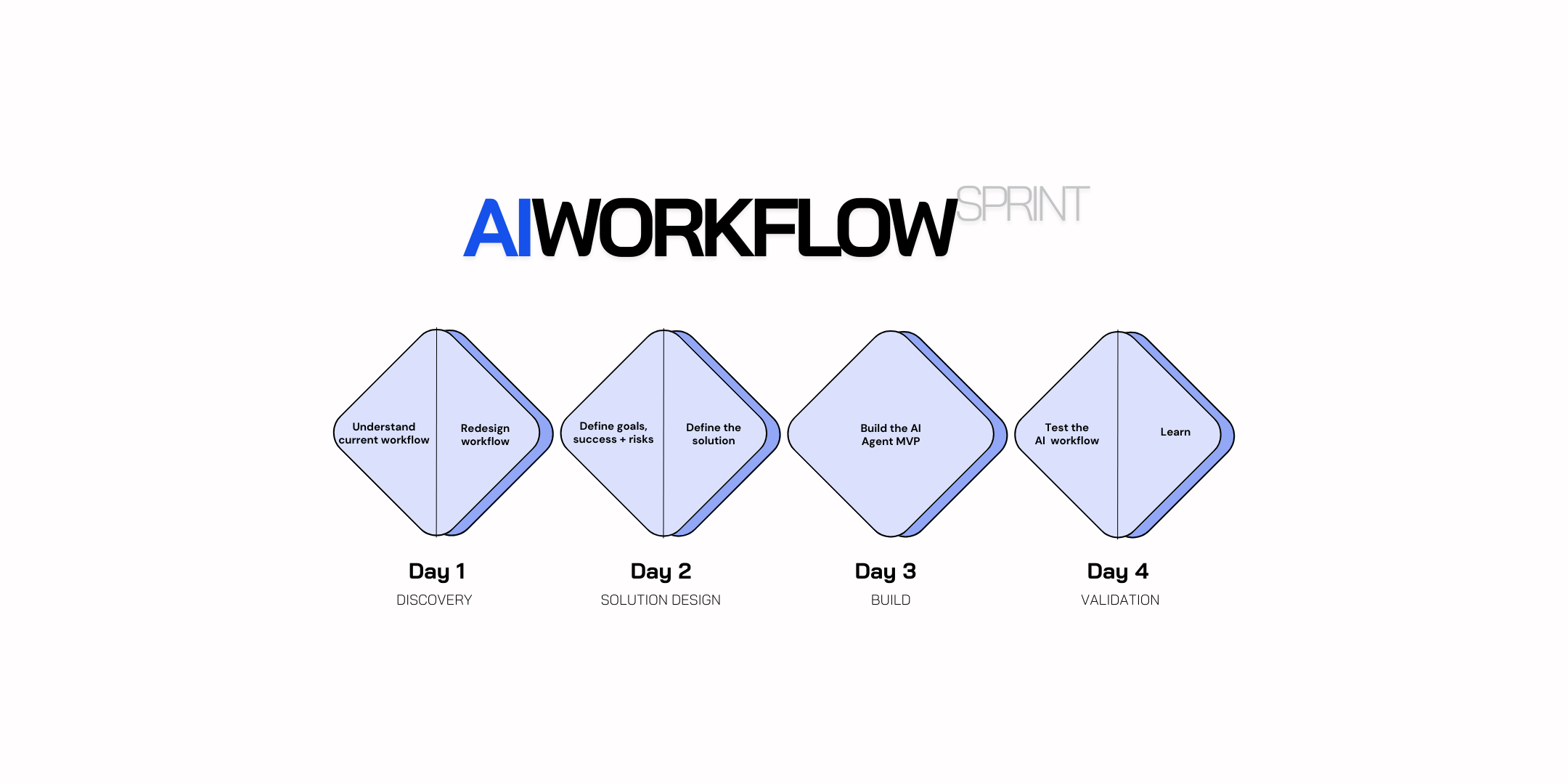
Participants learn to guide a cross-functional team from a defined AI use case to a redesigned workflow and a clear plan for building and testing the new AI workflow.
They learn to map how work actually happens today, identify friction and bottlenecks, and redesign the workflow around business outcomes and the capabilities AI makes possible.
They then define success measures, identify technical, data and adoption risks, and turn the selected solution into a storyboard and build plan.
They also learn how to prototype and test the agentic workflow, providing evidence for a decision to scale, iterate or stop.
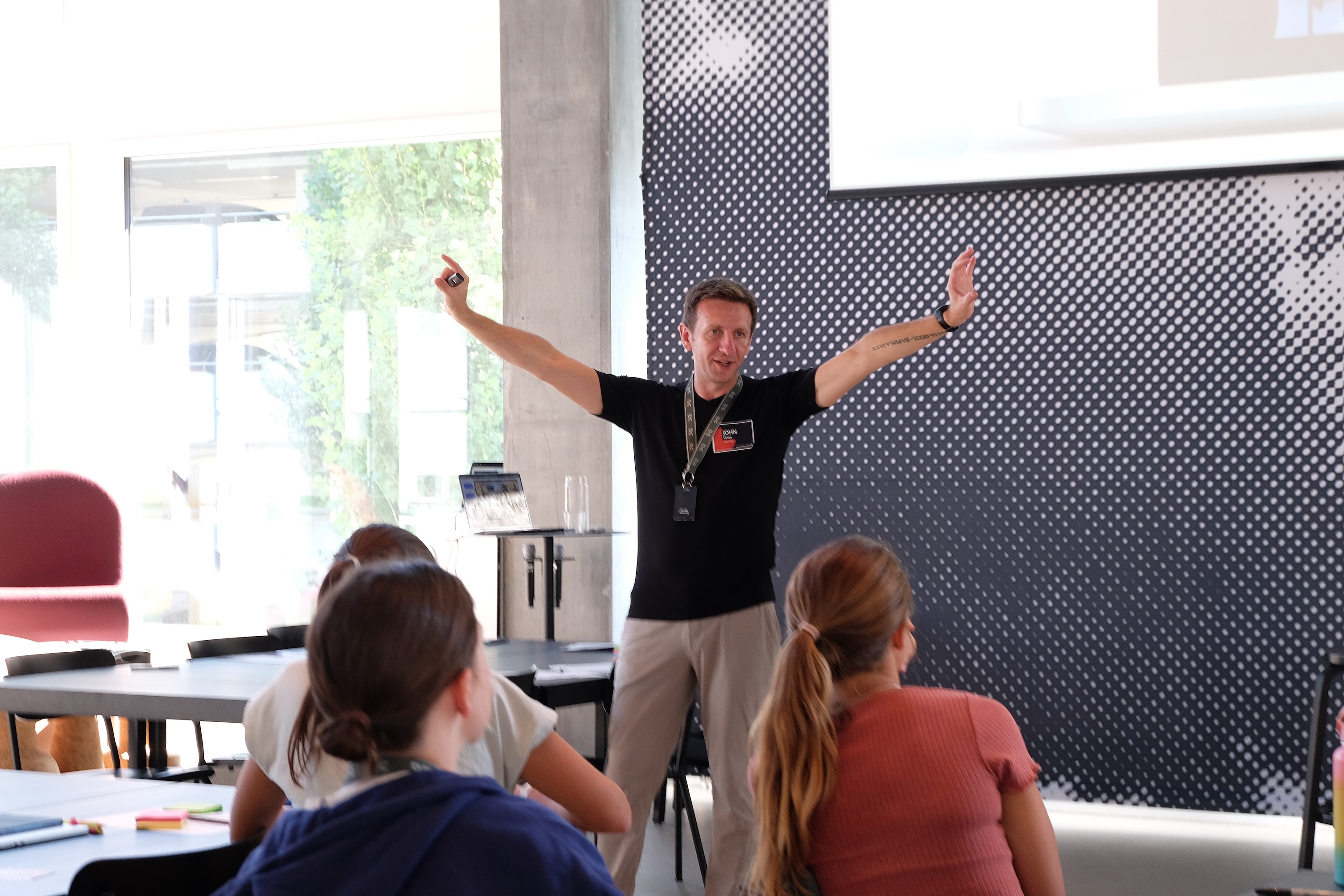
Participants learn by doing. The training is run as a live workshop, where participants work through both methods, practice facilitation and experience the decisions involved at each stage.
They leave with the complete facilitation toolkit — playbooks, agendas, slides and worksheets — so they can prepare and run these workshops with clients and internal business teams.

.png)
Technical delivery teams already bring the engineering expertise. This training strengthens the consulting and facilitation side of their work, giving them the confidence to lead structured discovery sessions with clients and business teams.
They also leave with the complete facilitation toolkits — playbooks, step-by-step agendas, ready-to-use slides and worksheets — so they can prepare and run workshops without having to design them from scratch.
Build the discovery capability once. Use it before every AI build.

Bring together your engineers, solution architects, technical consultants and AI or automation specialists responsible for shaping and scoping AI projects.
We'll deliver the training at your office, using real business challenges and workflows. Participants learn and practice together, in the context of the work they'll be expected to lead.
Three days. Up to 24 participants. In-person at your organization.

Once your team starts facilitating discovery and workflow redesign workshops with clients or internal business teams, we can support them through their first sessions.
We'll help with preparation, review workshop plans and stakeholder selection, and debrief afterward to identify what worked and what needs improving.
Format: Remote coaching and advisory support

If you only want to train one or two people from your team, they can join our public AI Facilitator Training in Berlin.
They'll learn the same methods in a small group alongside practitioners from other organizations. It's also an opportunity to experience the training before committing to a larger internal cohort.
Three days. Up to 8 participants. Berlin
How AI Champion programs work in practice — and what we've learned building them with enterprise teams.