AI Workflow Design 101 is a four-hour live remote training where employees learn to map their existing workflows and design new ways of working with AI.
Critical thinking · Human judgment · AI workflow design
Organizations have invested in AI tools and literacy training. Employees are using AI to draft documents, summarize information and complete individual tasks faster.
But changing how work gets done requires a different approach. Employees need to examine their existing workflows, identify opportunities for improvement and make informed decisions about where AI fits.
This creates three practical challenges.
People know how to do their jobs, but they rarely step back to examine how the work happens from start to finish. Without understanding the existing workflow, it's difficult to identify what should change.
Employees need to distinguish between tasks where AI can create meaningful value and those where it introduces unnecessary complexity, risk or additional work.
Making one step faster doesn't necessarily improve the overall process. Employees need to reconsider how tasks connect, what can change and which responsibilities should remain human.
This training is for organizations that want employees across departments to develop a practical method for redesigning their own work with AI.
Build on foundational AI literacy by helping employees move beyond individual AI tasks and apply what they've learned to the workflows they manage every day.
Reach hundreds of employees at once through a live, practical training that works across departments, roles and levels of AI experience, while allowing everyone to work on their own workflow.
Develop critical thinking and judgment around AI so employees learn to question how their work happens today, assess where AI can add value, and make informed decisions about what should change.
Help employees identify and assess AI opportunities by giving them a structured way to understand their workflows, explore what AI could do, and recognize when further validation or technical support is needed.
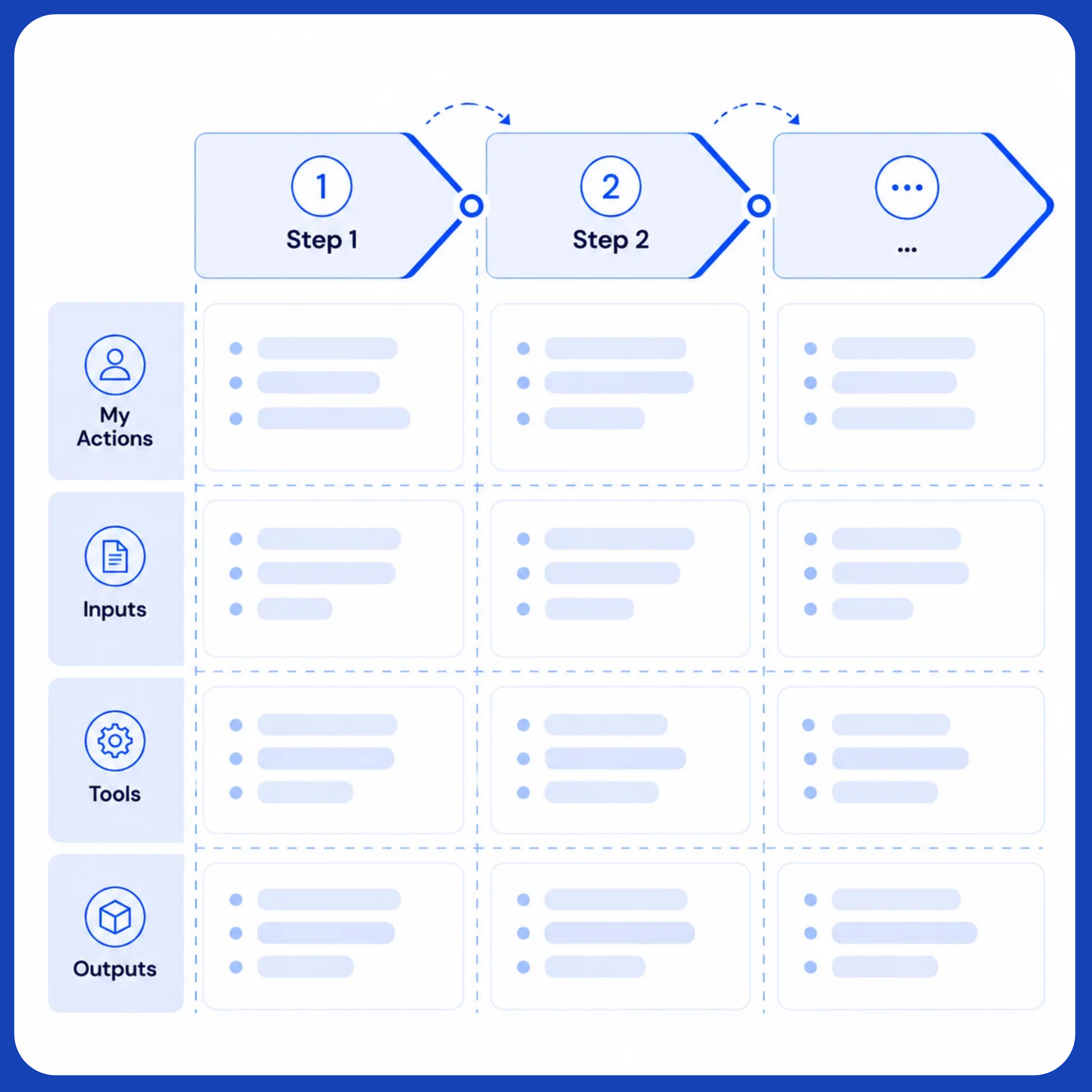
Participants select a workflow they own and map how it actually runs, including the steps, inputs, outputs, dependencies and workarounds that are part of the process.
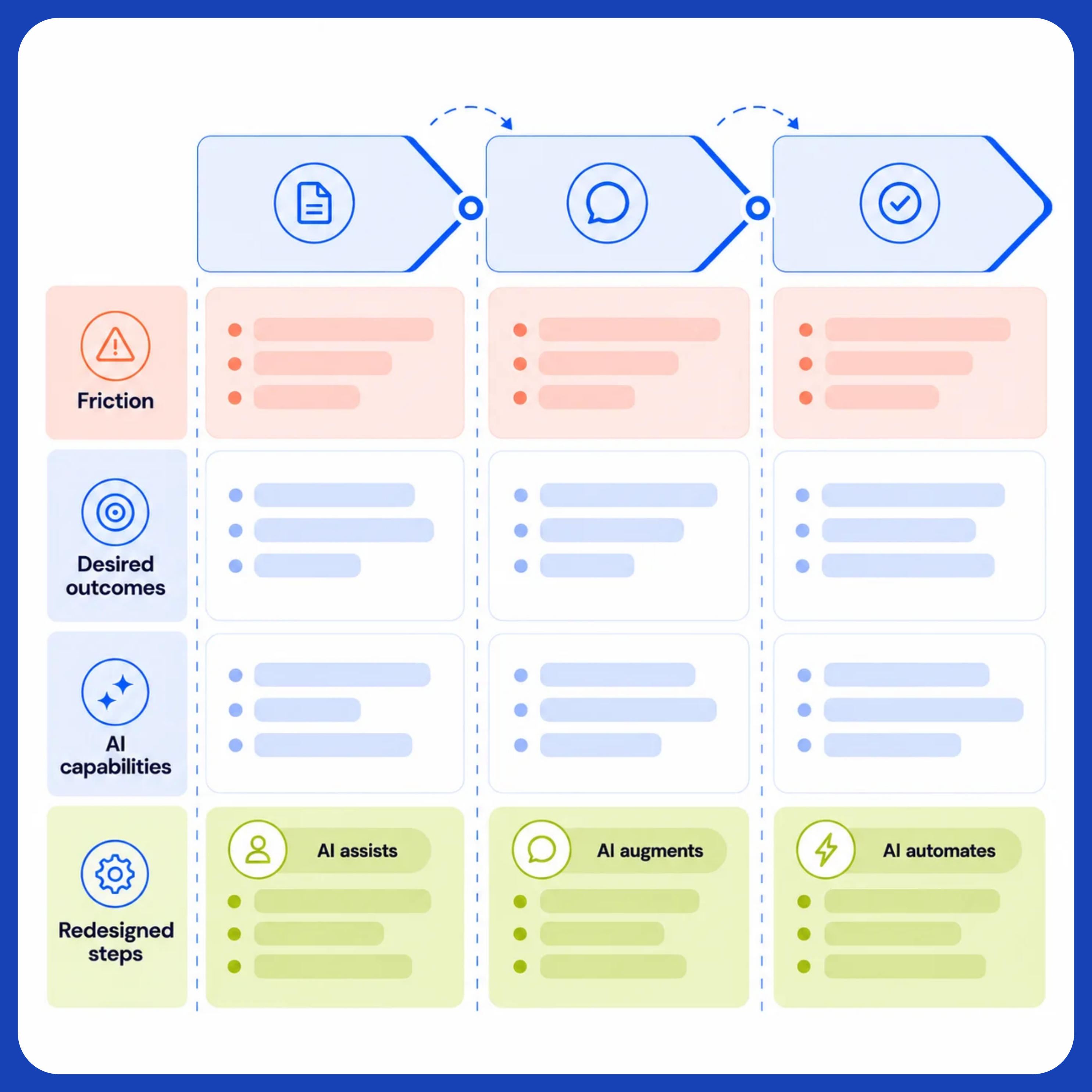
Participants identify where time and effort are lost, from repetitive tasks and unnecessary steps to bottlenecks and delays. They examine what's causing the friction rather than simply addressing its symptoms.
Before considering AI, participants clarify what the workflow should achieve and what a better result would look like. This gives them a clear basis for evaluating potential improvements.
Participants explore relevant AI capabilities and decide which tasks AI could support, which responsibilities should remain human and how the workflow could be reorganized around those decisions.
Participants assess their proposed workflow against practical requirements, risks and constraints. They identify what can be tested with existing tools and what needs further validation or technical support.
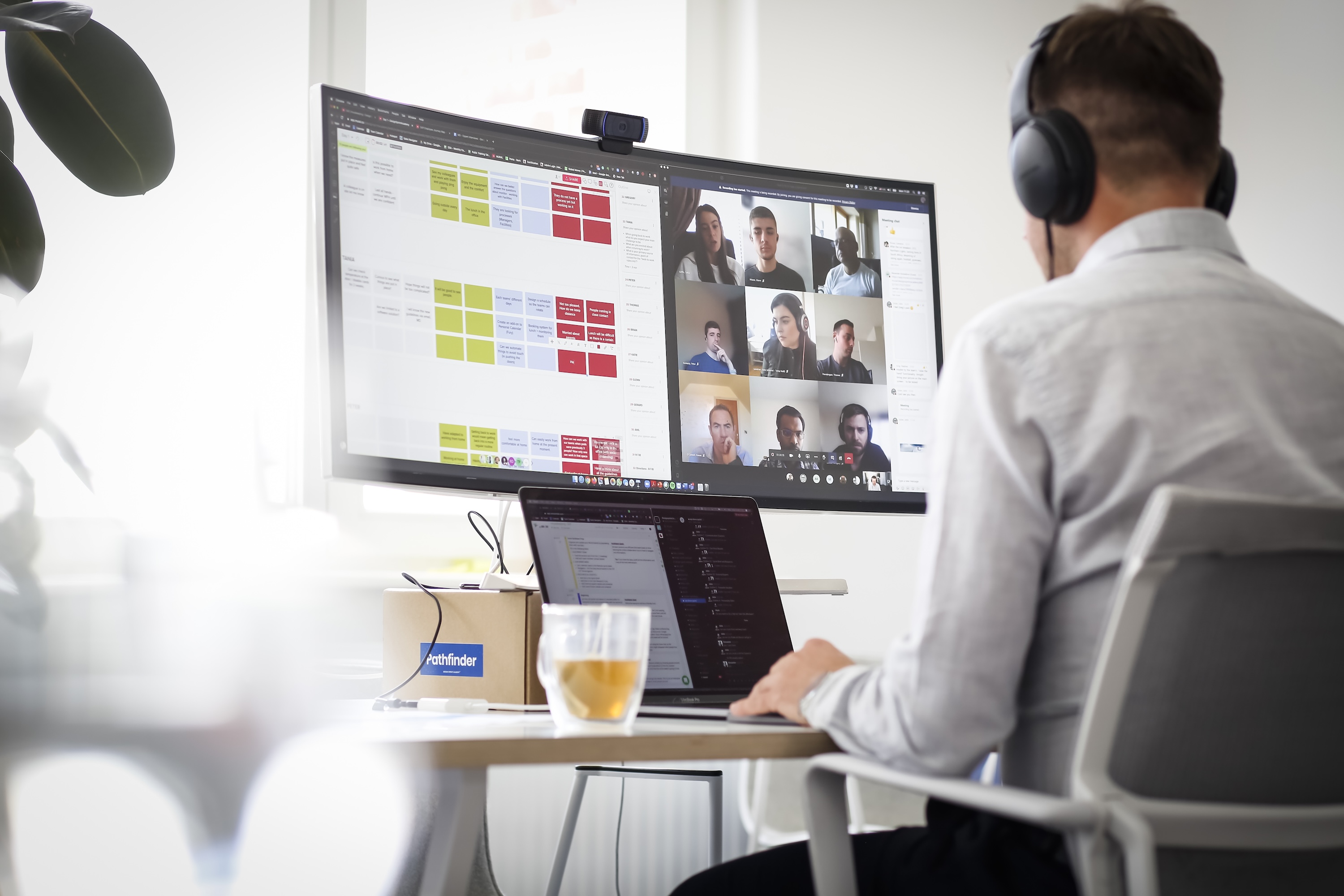
The training is delivered live and remotely, with a DSA trainer guiding participants through the method. Everyone works on their own workflow using the AI tool their organization already provides.
Participants leave with an AI workflow design, the complete framework and a guided prompt kit they can use to redesign other workflows independently.


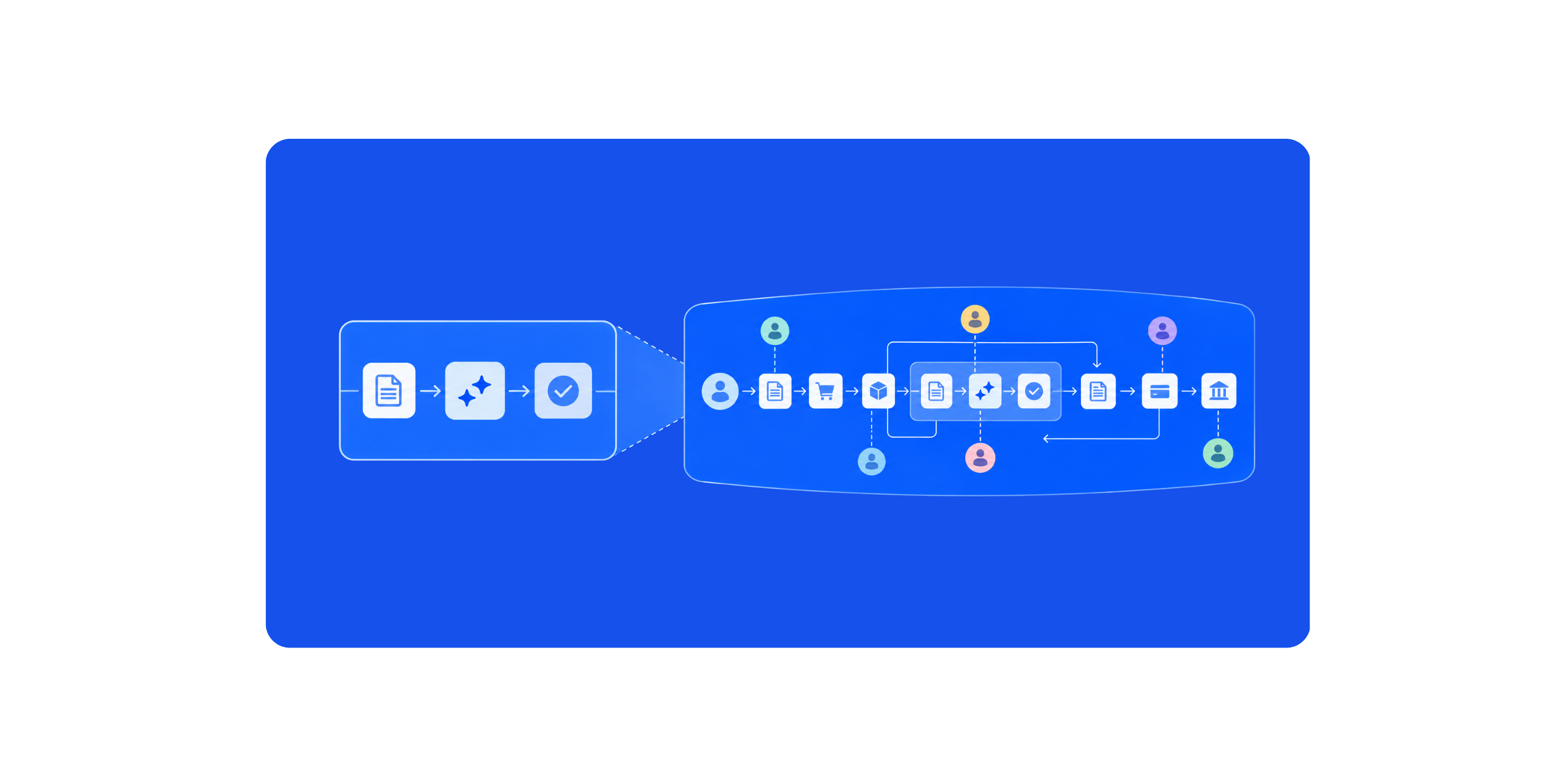
Every participant leaves with a visual map of how one of their workflows could work with AI. It shows how the steps could change, where AI could help, and which decisions and responsibilities remain human.
They also learn how to approach workflow redesign: how to examine existing work, identify opportunities, and make informed decisions about AI.
For the organization, this builds a shared capability across departments. Employees learn to think critically about how AI could change their work, rather than simply adding AI to individual tasks.
One workflow mapped for AI. A method to rethink the next.

Bring employees from across your organization together for a four-hour live remote training.
Guided by a DSA trainer, participants apply the AI Workflow Design method to a workflow from their own job, using the AI tools your organization already provides.
Through practical exercises, they explore how their workflow could change with AI and create a visual blueprint of a possible future workflow.
Employees develop the critical thinking and judgment to question how their work gets done and make informed decisions about how AI could change it.
4 hours · 600+ participants in one live session
Practical insights on rethinking everyday work, redesigning workflows, and making better decisions about AI.